
Looking Back at the Black Community
- Year
- 2026
- Volume
- 61
- Issue
- 1
- Creators
- Eula T. Murphy (with David V. Taylor)
- Topics
“Growing Up in St. Paul”
By Eula T. Murphy (with David V. Taylor)
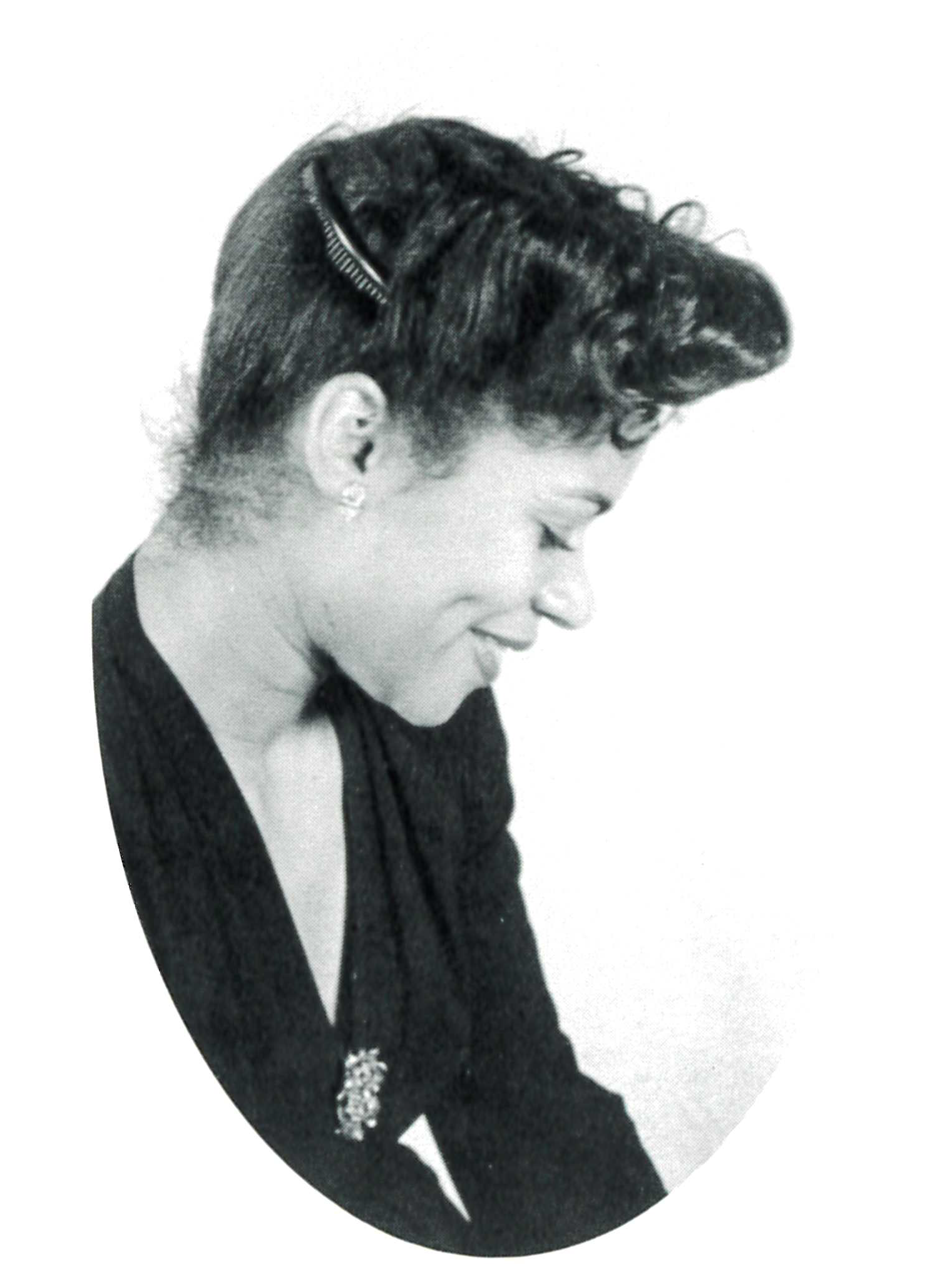
Editor’s Note: In order to share this magazine with you sooner, we pulled this article from the archives, which was originally published in the Winter 1992-1993 issue of Ramsey County History. David V. Taylor, who was at the time the dean of the General College at the University of Minnesota, collaborated on this piece with his mother, Eula T. Murphy. She passed away in 2006, and her son has offered the note below to accompany the reprint.
The original included this note on language: “The term ‘black’ has been used consistently throughout, except for a few places where ‘colored’ is used for emphasis to be more in keeping with the period being described.” I have likewise retained the terminology chosen in 1992, in order to hear the writer’s story as she wrote it—contextualizing the piece as a historical document in itself, reflecting the conventions of the time. Today, updated style guides capitalize the word “Black” as a cultural identity, and ensure the word is used as an adjective, not a noun.
Foreword from David V. Taylor
My mother, Eula T. Vassar, was born in Birmingham, Alabama on August 25, 1919. Encouraged by family members residing in St. Paul, her family relocated to St. Paul when she was an infant. Her father, Joseph Vassar, gained employment as a redcap porter at the St. Paul train depot. Her mother, Eloise, was a housewife and parent to seven girls. She died at the age of thirty-six in St. Paul. Upon her death, her sister, Marie, relocated to St. Paul to assist Joseph in the raising of the girls.
The extended Vassar family was well known in St. Paul’s Black community. The Vassar girls were engaged in activities at the Hallie Q. Brown Community Center and Welcome Hall. Although raised in a supportive environment, young Black women were not necessarily encouraged to pursue higher education but to marry and raise families. Employment opportunities were limited.
Mother graduated from high school and was to attend Tuskegee Institute in Alabama. Because of the Great Depression, the opportunity never materialized. However, she kept the train ticket purchased by her father to Tuskegee all her life. She later received training as a nurse’s assistant. Mother would marry three times and have three children. Although she did not receive a formal college education, four of her sisters did. She, as well as her sisters, would share stories with their offspring about migration out of the South, growing up in St. Paul, and the importance of an education. My early interest in history was nurtured by these conversations.
While attending Central High School in St. Paul, I was encouraged by my American History teacher to attend the University of Minnesota and earn a doctorate in history. I did, and my doctoral thesis was “Pilgrim’s Progress: Black St. Paul and the Making of an Urban Ghetto 1870–1930.”
This article was inspired by these conversations with my mother and her sisters about coming of age as young Black women in St. Paul. Part II, published in spring 1993, reflected my coming of age as a Black male in her community.
_____________________
I was born in rural Alabama in August of 1919. The Armistice ending the Great War had been agreed to the year before. The Treaty of Versailles was signed by the Germans in June of 1919. Black troops who had bravely fought for democracy in Europe were in the process of being demobilized and returned home when racial rioting erupted in major cities across the United States. Reports of black men being lynched in uniform were common, particularly in the South.
The lynchings in Alabama may have been the reason for my father’s decision to move to Minnesota. Father worked as a delivery boy for Kaheen Brothers Dry Goods store in Birmingham. Earning six dollars per week, he supported a wife and three children. Father was unskilled and not well educated. It is uncertain whether he ever finished high school. My mother was better educated, having completed a private Episcopal high school. She was trained as a seamstress and was employed by well-to-do white families. Joseph Vassar and Eloise Shaw were married in Birmingham on December 29, 1914. In September of 1915, their first child, Beatrice Bailey Bell Vassar, was born. Two years later they had another daughter, Lola Mae.
During the winter of 1920, Father’s favorite aunt, Josephine (Vassar) Hargrave, became gravely ill with pulmonary tuberculosis in St. Paul. Several years before, after the untimely death of her husband, she and her five children had moved to St. Paul from Goldsboro, North Carolina. Her brother, Carroll Vassar, had moved to St. Paul in 1888 and may have been the reason that she chose to settle there. Having been notified of her condition in May, Father immediately made preparations to leave for St. Paul. Unfortunately, Aunt Josie (as she was called) died while he was in transit. Father arrived in time for her funeral. With the loss of their parents, the Hargrave children, now approaching adulthood, still needed the support and guidance of surrogate parents. At their urging, my father returned to the South to prepare the family for the move north. The prospect of earning $14 a week in the South St. Paul stockyards was attractive. The additional income that Mother could earn as a seamstress would make a more comfortable living possible.
We moved into the Hargrave home at 292 North St. Albans some time between July and August of 1920. A short time after relocating, the Hargrave and Vassar families moved into a more spacious five-bedroom, three-story Victorian house at 685 Carroll Avenue, about one block away. The house was in a respectable, racially mixed neighborhood one block south of Rondo and two blocks west of Dale Street. Many prominent black families lived in the area, including the Harris, Rhodes, Lewis, Goins, Moore, and Jackson families. Some, like the Jacksons, were also migrants from Alabama. They had known my parents while living in the South, and it was their life-long friendship that sustained Mother through particularly tough times.
The employment opportunity that my father sought was partially realized. He began work at Swift’s Packing Plant in South St. Paul—for $13.50 per week. He left there to work as a redcap at the St. Paul Union Depot in 1922. Unfortunately, he could not escape from his psychological fear of indiscriminate lynchings in the South. On June 20, 1920, while Father was in the South preparing to relocate, three black men were lynched in Duluth for allegedly raping a white woman. The fact that such an event could have happened in Minnesota left the Twin Cities black community traumatized. Years later, I remember sitting at the top of the staircase as a child, listening to adults discussing that incident and other race-related affairs in muted voices almost as if they were afraid of being overheard.
In the new house, our family was assigned the front two bedrooms on the second floor. I shared a bedroom with my sisters, Beatrice and Lola. We slept on a leather couch with a retractable bed. My parents’ bedroom was next to ours. My earliest memories of that period surrounded the birth of our sister, Myrtle Vivian, in the adjoining bedroom. She was delivered by Dr. Valdo Turner, a well-respected black physician. The year was 1921. I was almost two years old. Other memories of that period include watching the lamplighter at dusk through the same bedroom window with his ladder and long gas pole making his rounds igniting the streetlights, and the particular awe in which I held a black police officer by the name of Lawrence Liverpool. Officer Liverpool had a huge black horse which he watered at a tank located on the corner of St. Albans and Carroll. The city water truck used the same tank to water down the streets.
In 1923, anticipating the birth of their fifth child, Josephine Leobald, my parents moved to 417 University Avenue, a single-family home converted to a duplex in a neighborhood of blacks, Jews, Italians, and Swedes. Father was now employed as a Pullman porter “running on the road,” leaving Mother to direct the family during his long absences. ln that house Father contracted a serious case of rheumatism, which incapacitated him for a period of time. The poor sanitary conditions, rats, dampness, freezing water pipes, and difficulty in heating the apartment during the winter led to a decision to move again, in 1925, to 509 University, above a grocery store called Zeff’s that was owned by a Jewish couple. It was here that the sixth child, Eloise Pauline, was born in January of 1926. My sisters and I began attending the “old” Jackson School at Mackubin Street and Sherburne Avenue. (The new Jackson School was built in 1926 on Arundel Street between Edmund and Thomas Avenues.)
University Avenue was on the outer fringes of the (then) black neighborhood. Most blacks lived along the Rondo Avenue corridor stretching from lower Rondo (in the area of the Capitol approach) out to Lexington Parkway and from Central to Iglehart Avenues. Even though the black community was small in number, it was divided socially. Lower Rondo, below Dale Street, was referred to as “Cornmeal Valley,” a vague reference to a food staple in southern diets; lower Rondo was home to the materially unfortunate. Above Dale Street was called “Oatmeal Hill.” There the socially prominent lived in better housing along Iglehart, Carroll, Rondo, St. Anthony, and Central Avenues. In spite of social class differentiation, every family knew all the other families.
Lower University Avenue was part of Frogtown, perhaps a reference to the original inhabitants of the area (frogs). As a black family, we made many friends. As black children, however, we were constantly harassed going to and from school by whites. On one occasion, at the age of six, I beat up the school bully, a white boy twice my size, by biting and scratching him. That encounter earned for me the name of Kitty, a reference to my cat-like fighting ability.
With the onset of the depression, black porters and redcaps were being laid off. Dissatisfied with his position, in October of 1929 Father requested and was granted a transfer to Cleveland, Ohio, where we stayed for almost a year. A recurrence of his rheumatic condition forced the family to return to St. Paul. The move back to St. Paul cost Father his seniority. As the economic depression lengthened, he was laid off.
The depression hit the black community in St. Paul very hard. The major railways were forced to lay off personnel, many of whom were black. Workers in the meat-packing industry and those in domestic service were also affected. Unable to work, most black families, including ours, had to accept public assistance. In order to supplement food commodities issued by public assistance programs, Father was employed by the Works Progress Administration at $16.50 per week. During this time another daughter, Barbara Alfreda, was born in 1932.
In 1934 the economic depression was beginning to lift enough that the railroad industry was able to recall some of its workers. Father was recalled to work at the Union Depot. Unfortunately, just as things appeared to be on the upswing, Mother, pregnant with her eighth child, a boy, suffered a miscarriage and died. She was only thirty-six years old; I was fifteen. The family had not been prepared for Mother’s untimely death. Father seemed overwhelmed with grief and the prospect of raising seven girls. My older sisters contacted Mother’s sister, Marie Shines, in Birmingham and asked if she would come north to help stabilize the family. Aunt Marie accepted the challenge. Single and black in Alabama, she had nothing to lose. Although Father would marry twice again (outliving each of his wives), it was Aunt Marie who became the matriarch of the family.
Mother was a gifted person, married to a man with limited ability. It was her personality and determination to improve the material circumstances of the family that shaped our character. Apparently she came by her gifts quite naturally. I learned later from her sister that several of their relatives were college graduates and professional people. My great-grandmother, Mary Davis, was the offspring of Margaret Willis and Oliver Harrison, a descendant of William Henry Harrison, the ninth president of the United States.
In spite of her obvious abilities, the only avenues in which Mother could express her creativity were sewing and homemaking. This was not an uncommon situation for black women of her generation. Few had marketable skills. They were expected to be housewives. They bore large families, and raising children was a full-time occupation. Mother’s aspirations were limited by social custom, but she was determined that her daughters would have more opportunity to understand and experience life. An appreciation for learning, the arts, proper social etiquette, and a determination to succeed were hallmarks of our upbringing.
Mother encouraged us to read. She secured library cards for all of us and on Saturday mornings walked with us three miles to the central library building downtown to exchange books. We were seldom absent from school. She enrolled us in health, dance, drama, and social etiquette classes at the Hallie Q. Brown Community Center, where we were also exposed to adult role models. Our instructors there taught us appreciation for Negro history and introduced us to the literature of the Harlem Renaissance. Mother taught us the Negro national anthem, “Lift Every Voice and Sing.” She saw to it that we took Bible studies classes at the Christian Center. We were devoted members of Zion Presbyterian Church (a black church located at 379 Farrington Street) and also patrons of Welcome Hall Community Center, an outreach program of Zion Presbyterian Church.
Mother had intended that we would each attend college or acquire some occupational skill. However, upon her death my options were as limited as those of any other “colored” girl. At fifteen, I was too old to be a girl but not old enough to be a woman. Without Mother’s guidance and encouragement, I found it increasingly difficult to achieve focus in my life. I learned quickly that the housekeeping skills Mother had taught us had more practical applications. When I was at the point of graduating, the high school counselor recommended that I seek employment as a domestic servant. In spite of the desire of most black parents for their children to be placed in college preparatory courses, all “colored girls” were tracked into a curriculum that included some social sciences, home economics, stenography, and other business-related courses. Upon graduating from Mechanic Arts High School in 1936, I had asked Father’s assistance in order to attend Tuskegee Institute in Alabama. Although he was able to secure a rail pass, he was not able to raise enough money for tuition.
Of necessity, I sought employment. Opportunities beyond domestic work were limited or nonexistent for young colored girls—discrimination was pervasive. Black women without independent means, skills, or business interests were relegated to work as matrons, domestics, elevator operators, or lounge attendants—or they resorted to prostitution. The lack of employment options made it virtually impossible for young black women to become self-reliant. Consequently, many frittered away time at unproductive activities until an unplanned pregnancy resulted in a hasty marriage. They often became the next generation of homemakers, exchanging one cycle of dependency for another—from their father’s household to their husband’s.
My first job was as a maid in the ladies’ lounge at the World Theater. Later, in 1939, under the auspices of the National Youth Administration, I was placed as a filing clerk at the Metropolitan Life Insurance Home Nursing Service. Fortunately, through several administration projects during the depression, many young girls were able to get jobs not normally made available to blacks. It was during the summer of 1939 that I met the man who was to be the first of my three husbands.
My sisters were more fortunate. Three were able to attend Macalester College, although only two graduated. Another sister graduated from the University of Minnesota. Yet another attended the University briefly and later finished a cosmetology school program in St. Paul. Still another completed a course of study at Poro Cosmetology School in Chicago. (Poro was founded by Madame Walker, the first black woman millionaire, who produced a successful line of black hair care products.)
To be young and black in St. Paul before and during the Second World War was exciting. The black community was small. The older adults made an effort to provide recreational outlets for young adults. One could audition for plays and dance revues that were held regularly at the Hallie Q. Brown Community Center. Adults’ social clubs created junior memberships for the younger set. One such club was called the Credjafawns. They provided picnics, socials, parties, and dances where young people could meet and socialize. The Sterling Club, a men’s club, also provided social outlets. The churches were still another recreational outlet.
And then there was Jim Williams’s Bar. Located on the southwest corner of Kent and St. Anthony Streets, a block north of Rondo, it was one of few “colored” eating and drinking establishments in the city. Jim’s was the gathering place of the young, the old, and the restless. A decent girl did not walk into Jim’s unescorted. A group of decent girls could. It was “the place to be seen” on weekends. During summer evenings young men and women would park and sit in big cars near the bar to socialize or watch activities on the sandlot diagonally across from the bar.
Those who wanted more excitement would sneak over to north Minneapolis. Although St. Paul girls were routinely admonished not to get involved with northside boys, there was an element of fatal attraction—the risk of being found out that made those liaisons so exciting. North Minneapolis was known for its vice elements, which seemed to escape the notice of the authorities. Any St. Paul woman with a reputation to protect would not be caught dead (escorted or unescorted) in that area.
Being young, restless, and with a reputation to protect, I focused my energies on dancing, hoping against the odds that I would be “discovered.” It was during this period that my first husband, Clarence Taylor, tap-danced his way into my heart. Originally from Fort Wayne, Indiana, he attended Xavier University in New Orleans briefly. He migrated to St. Paul, intending to stay with relatives until employment could be found. He had taken tap dance lessons as a boy and had become a masterful dancer as a young man. Often he used this talent to supplement his income. He was perhaps typical of many black men who migrated to St. Paul seeking opportunities. Although he was a high school graduate and reasonably intelligent, he had no skills to offer the labor market. During the depression there were many college-trained black men and women marking time in unfulfilling jobs.
We were married in January of 1940. Because my husband was unable to secure employment in St. Paul, we decided to move to Fort Wayne, where our first child was born in August of 1940. Unfortunately, we learned that discrimination in Fort Wayne was worse than in St. Paul, whereupon we returned to Minnesota at the onset of America’s entry into World War II. Upon our return, Clarence was able to secure a job with International Harvester, which he retained until being drafted in December of 1944. His tour of duty was brief. He was assigned to the Philippine Islands and was stationed there when the Japanese surrendered in August of 1945. Our second child was born in July of that year. After Clarence’s return from the war, things were never quite the same. Although he had steady work with the post office, he did not seem to care for the responsibilities of parenting. Irreconcilable differences led to divorce in 1950.
During the war years I made that difficult transformation from youth to adulthood. I married, bore two children, and managed a divorce. I learned to work and accepted the responsibility of raising children without public assistance. I also stopped dancing. I would marry twice again before 1952. The second marriage failed but produced another son. The third lasted thirty-five years.
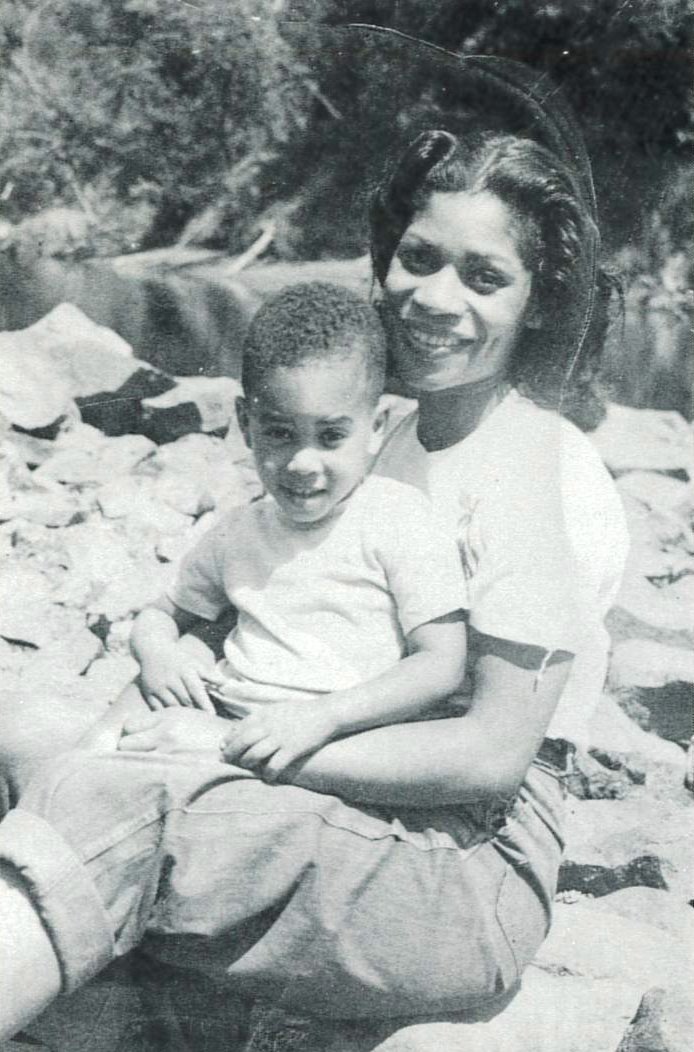
For black women in St. Paul, the war years brought a perceptible change in status. Many of my girl friends were able to secure education or training that led to new employment opportunities. Some became teachers or lawyers and one, a nurse by training, married a physician who would later become dean of the Harvard Medical School. Others had successful marriages and were financial contributors to their families.
The community changed as well. Many of our young black men did not return from the conflict. Those that did began raising new families and taking places of leadership now relinquished by the elders who had raised us. During the war the economic boycott threatened by Cecil Newman, editor of the Minneapolis Spokesman, coupled with the work of the Urban League and the NAACP, helped to pave the way for better employment opportunities for black men and women. Together with expanded educational opportunities afforded returning veterans, some members of the black community made moderate economic gains. Those gains made it possible for a small black middle class to develop. Ironically, the children of these parents, who came of age in the 1960s, helped to confront the remaining vestiges of overt discrimination that continued to compromise our lives in the Twin Cities.
The physical features of the community also changed. Both Oatmeal Hill and Cornmeal Valley became victims of urban renewal in the late 1950s. The construction of Interstate 94 was responsible for the demolition of hundreds of homes along the Rondo corridor. Although detrimental to the social and political fabric of the black community, the condemnation and purchase of property afforded many black families the opportunity of moving into standard housing that might not have been affordable under ordinary circumstances. In 1983 a community celebration called “Remember Rondo” was established by long-time residents of the area to recapture a sense of community pride and a history of the area.
Eula T. Murphy (1919-2006) was a lifelong resident of St. Paul and, at the time of this writing, a senior volunteer at the Rondo Magnet School.
- Year
- 2026
- Volume
- 61
- Issue
- 1
- Creators
- Eula T. Murphy (with David V. Taylor)
- Topics