
The Rise and Fall of the Passenger Pigeon in Ramsey County and Environs
- Year
- 2026
- Volume
- 61
- Issue
- 3
- Creators
- Jennings Mergenthal
- Topics
“An Insatiable Colonial Appetite”
by Jennings Mergenthal
In April 1864, the Saint Paul Daily Press advertised the lunch menu at the Star and Garter Concert Saloon: “Turtle soup, frog legs, roast beef, wild pigeon and mallard duck.” This fine fare could be had from 11 a.m. to 2 p.m. on Fifth Street and Jackson Street, next to Illingsworth’s Mammoth Town Clock.1
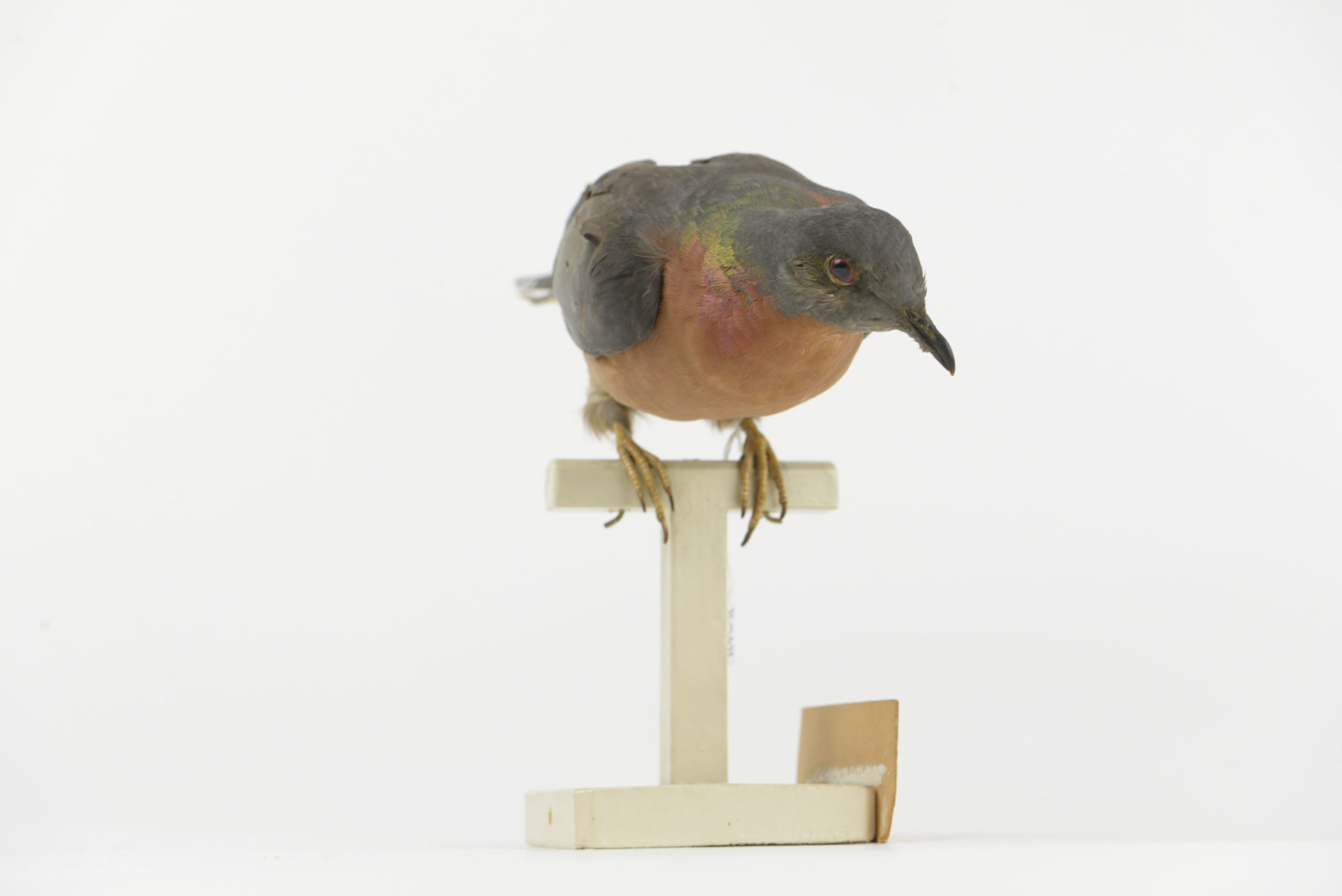
The “wild pigeon” they referred to was what we would know as the passenger pigeon (Ectopistes migratorius), at one time the most populous bird in North America. The pigeon was slightly smaller than a crow, measuring fifteen to eighteen inches long and weighing up to three quarters of a pound. At their height, their massive flocks were capable of blocking out the sun as they passed overhead.2 Their enormous communal nests were miles across and branches would break under the weight of their roosts.3 But just fifty years after this sumptuous lunch was served at the Star and Garter, only one passenger pigeon would remain.
Precolonial Ecosystems
The passenger pigeon was migratory, its nomadic range extending north into what we now know as Canada and west into the Dakotas. They wintered in the South and returned to the forests of the Great Lakes in the spring to roost. The conventional range derives from the research of the A. W. Schorger and his seminal 1955 work The Passenger Pigeon: Its Natural History and Extinction. It is also from Schorger’s work that we have the canonical estimate of the number of passenger pigeons in North America: three billion, possibly as high as five billion, though in Schorger’s words this is a “guess.”4
Though Minnesota is traditionally excluded from the historic range, Schorger’s notes reveal the extensive presence of nesting populations of passenger pigeons throughout the region, a unique portrait of the fortunes of a rising state mirroring that of a declining bird.5 Ramsey County exemplifies this relationship. Early settlers noticed (and devoured) flocks of nesting pigeons. For their descendants, pigeons would be procured for fine dining or recreational hunting. For the next generation, the passenger pigeon would be a quaint frontier memory or a dusty museum specimen. Birds, of course, are not particularly interested in political boundaries. But the active development within Ramsey County made it decreasingly suitable for nesting and feeding as the nineteenth century went on.
Pigeons were opportunistic omnivores, eagerly eating fruit, grain, and insects, but they preferred mast: nut-like seeds including acorns, beechnuts, and American chestnuts.6 These mast trees were common in the hardwood forests of the Northeast and Great Lakes, due to intentional cultivation from the sophisticated silvicultural practices of Native nations.
The pigeon, too, was an important part of the Indigenous diets and culture. An account from 1842 in the La Crosse area by Lafayette Bunnell observed a pigeon roost some forty-five miles long and a group of Dakota youths checking pigeon nests to see if eggs had been laid. Bunnell’s interlocutor, James Reed, explained the prohibition on disturbing pigeons while nesting.7
Settler expansion throughout the eighteenth and nineteenth centuries forcibly displaced Native nations from their lands and their forests. In turn, this meant that the mast from these cultivated groves were not harvested, leading to more available food and allowing the pigeon population to grow exponentially. Recent genetic analysis supports this updated narrative: While the bird was ubiquitous prior to the arrival of settlers, the immense flocks that dominate colonial narratives of the early 1800s can be understood as a symptom of the environmental disruption of colonialism.8
In the summer of 1850, E. S. Seymour published one of the first colonial accounts of his travels the previous year in the newly established territory of Minnesota. In Kaposia, Little Crow’s Village, five miles downriver from St. Paul and in present-day Ramsey County, he noted that “the ground was covered with acorns and the trees were alive with pigeons.”9 The following year, the Treaty of Traverse Des Sioux opened much of southern Minnesota for colonization. As settler towns were built, they established newspapers, which diligently tracked the location of pigeon roosts.
Over the coming decades, these newspapers described a seasonal rhythm. In late March or early April, the flocks of pigeons would return to Minnesota. Settling in wooded areas, they would establish their vast nesting sites and lay their eggs. The parents would incubate their egg about two weeks, and it would usually hatch in mid-May. To feed themselves and their young, pigeons would devour food in the nearby area, much to the chagrin of local farmers.
The squab, the young pigeon, would be fed by both parents, who would regurgitate a curdled substance rich in fat and protein called “pigeon milk.” The fattened squab would gradually incorporate adult food into their diets. After two weeks of care the parents would abandon the squab, which would be forced to leave the nest. After a few days the squab would fledge and take flight, joining the massive flocks. Reports of pigeons would persist in newspapers throughout the summer, waning by August and September when the pigeons would depart for warmer climates, returning the next spring.
The pigeon had many predators, but the tremendous quantity of squab ensured that while many would be eaten, many more would survive. Pigeons were numerous in the Minnesota territory, and the early settlers were particularly eager for the opportunity to hunt the birds. The return of pigeons signaled not only the beginning of spring, but, more importantly, brought a cheap and accessible form of protein right to the settlers’ doorsteps. They were also commonly fed to pigs. Though their sheer numbers protected them from natural predators, that could never satiate the colonial appetite.
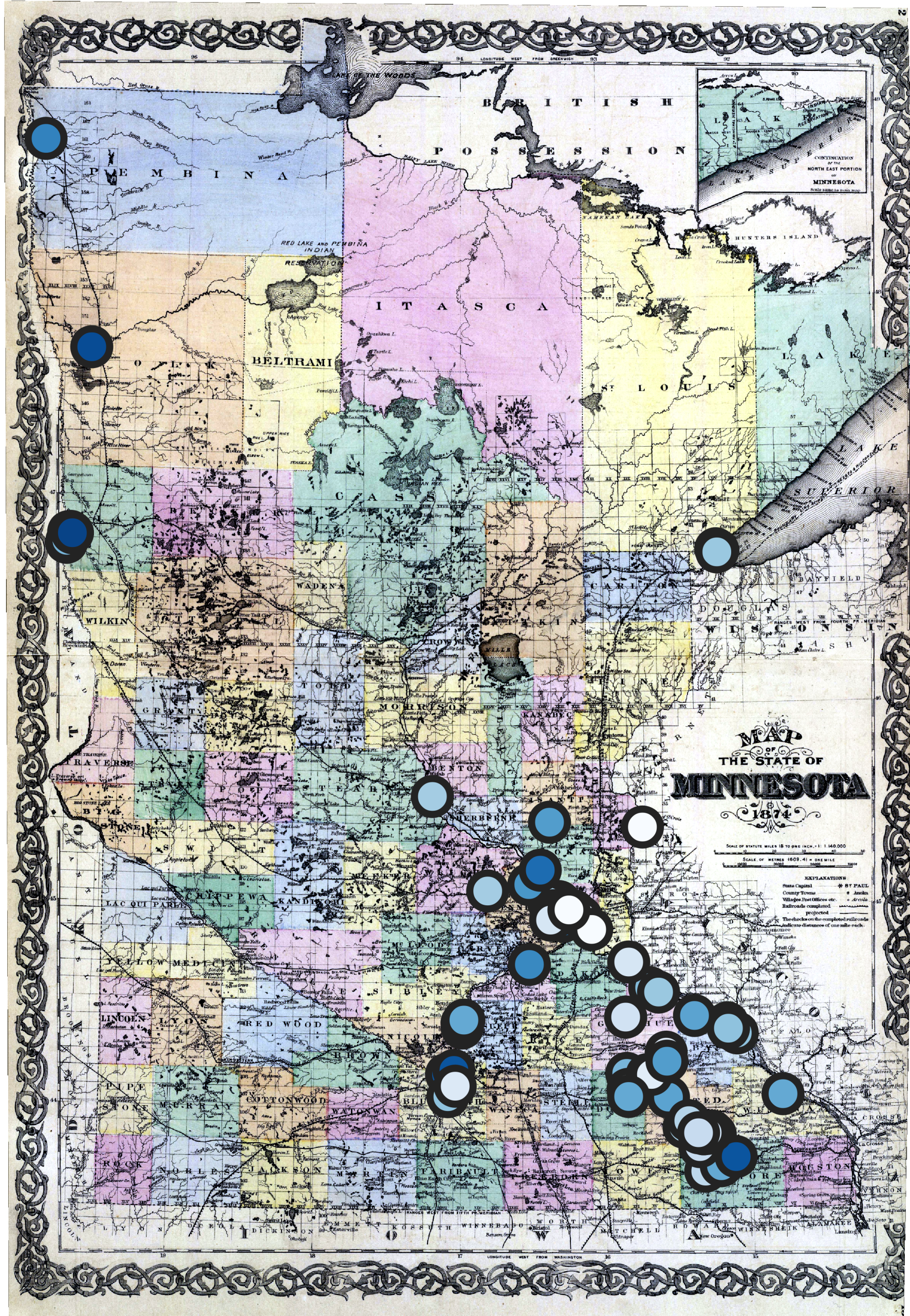
You can explore an interactive version of this map, which includes the text of each newspaper article here: https://notjennings.github.io/PigeonsMap/#8/44.842/-93.229 Click on the map to pan or zoom and click on a point to learn more!
Squabbing Carnival
The city of St. Paul was incorporated in 1854. That same year, the Minnesota Pioneer noted pigeons “very numerous” in the area, as one man brought a horse load of two hundred into town to sell, having killed them himself earlier that day.10 While shot pigeons were perfectly fine for small-scale personal consumption, netted pigeons were more prized commercially.11
Indeed, anyone with a gun could hunt enough pigeons for a meal with only a few minutes’ work. If ammunition were in short supply, pigeons could be had by other means. The Chatfield Democrat relayed the story of one nimrod, perhaps tongue-in-cheek: “We heard yesterday that a gentleman of this town, who is noted for his penuriousness, goes to the pigeon roost opposite every afternoon and kills the pigeons with a club, to save ammunition. We don’t believe it.”12
The woods near Chatfield, in southeastern Minnesota, would host one of the few perennial nesting sites in the state, and its denizens were eager to maximize their harvest. Nets could be strung from trees to ensnare part of the passing mass of birds. This was the method employed by at least one man in Chatfield, commended for his magnanimity:
Our friend Mr. Tompkins, a gentleman of leisure, who is stopping with Mr. T. Case, some six miles below this village, deserves to be classed among the benefactors of mankind for his kindness in furnishing the whole community hereabouts with Wild Pigeons. Mr. T. has a net which he handles with such skill that he is enabled to take just any number of birds desired, which are distributed to all who wish them without money and without price. We are indebted to Mr. T. for all the Pigeons we can use and—more too.13
Skilled commercial hunters could also make use of a stool pigeon. A live pigeon, its eyes usually sewn shut with silk thread, would be strung up as a decoy and raised and lowered as if it were landing. This would lure in flocks of pigeons who would descend into the waiting net traps.
If destined for the table, netted birds needed to be killed. Hunters broke the pigeons’ necks with their hands, or by placing the still-living bird’s skull in their mouths and crushing it with their teeth. Still others used specialized pincers or pliers designed to break the neck without detaching it.14
Some ensnared pigeons were fortunate enough to stay alive slightly longer. Netted pigeons were also valued by sportsmen: Hunting clubs, particularly in urban areas like the Twin Cities, would pay to procure live pigeons for shooting matches. Nearly three hundred such birds were purchased for an 1875 contest between the St. Paul, Minneapolis, and Stillwater hunting clubs; all but about sixty met their demise as the St. Paul hunting club eked out a narrow victory.
It was not just adult pigeons who were eagerly sought. Of particular value were the tender young squab, considered ripe for the taking when fully sized but not yet fledged—saving the cook the additional work of removing their adult feathers. “Squabbing,” as it was known, was a popular June pastime near large pigeon nests.
By and large, it was a happy summer affair, with community members flocking to the nests to enjoy festivities, brass bands, and plentiful roast squab. Newspapers salivated over the squab “crop” and speculated about when “persons desiring a feast” could expect it to be “fully ripe.”15 The fat, flightless squabs could be had from the nests by knocking them out with poles or by climbing the trees, though this was not without its own perils: “Be careful—as the squabbing carnival will soon commence we advise all who expect to capture their game by climbing to prepare themselves with stout pants. Remember the awful calamity that happened to a gentleman one day last season.”16
The gentleman in question appears to be a Mr. Isaac Day of Chatfield, who would spend at least the next ten years as the butt of breeches-related jokes from John McKenny, editor of the Chatfield Democrat: “The Chatfield woods are literally alive with wild pigeons, and are reported to be making the necessary arrangements for going into the ‘squabbing’ business on an extensive scale, in the same locality where they have nested two or three times before. Now for fun and pot-pies. Carry the news to ‘Isaac Day.’ ”17 And again: “The wild pigeons will please take notice, that ‘Isaac Day’ has returned to Chatfield, with a new pair of leather breeches, and if they have any regard for their ‘squabs,’ they will vamoose the ranch immediately.”18
But Isaac Day need not have worried about climbing in search of squab. In some cases, the harvest was done simply by shaking the trees themselves, though this had a greater risk of spoilage.19 If not caught, the fat squab would strike the ground and burst like so many overripe fruit.20 The Democrat estimated more than ten thousand squab eaten in the annual celebration each year.21
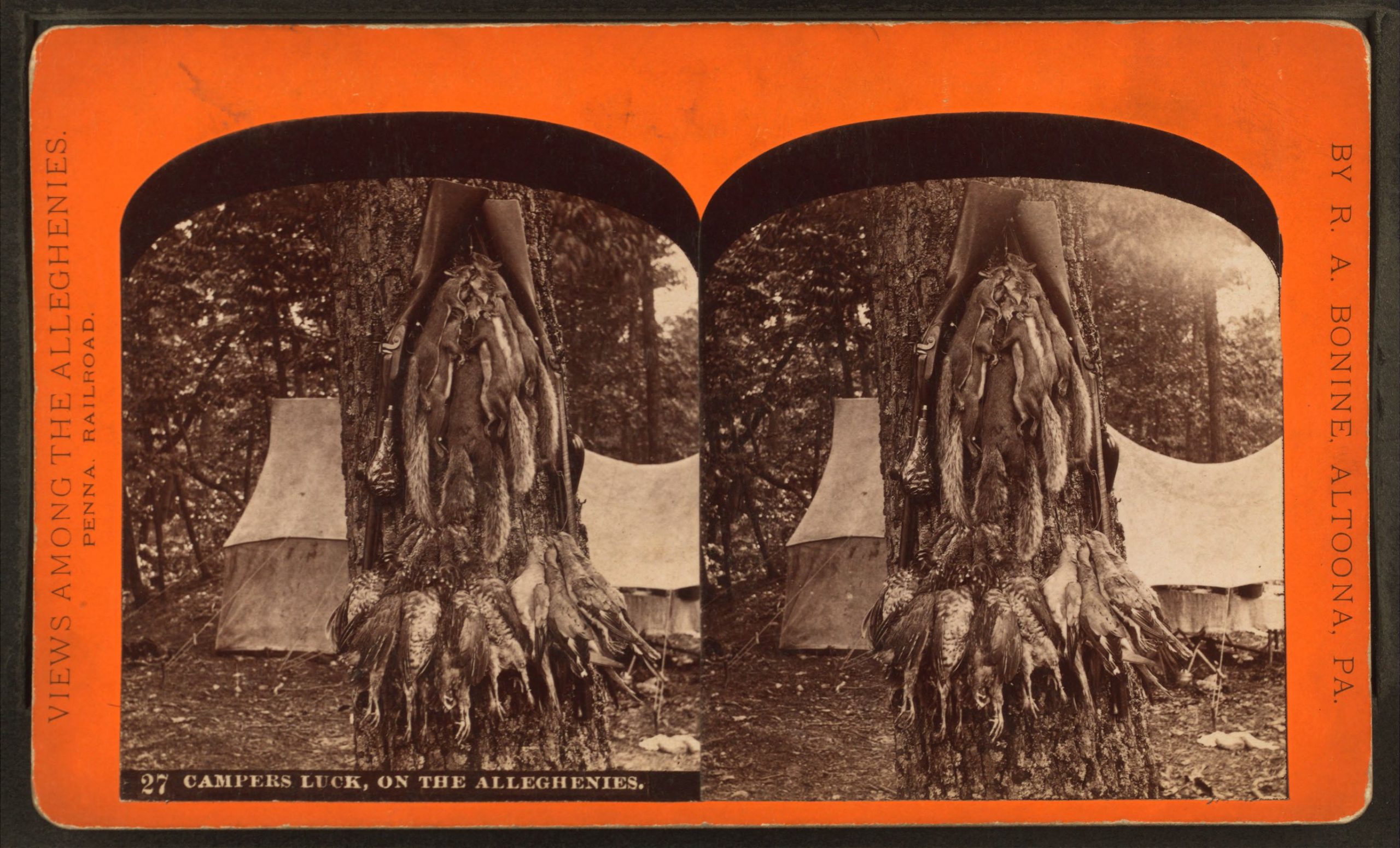
Technological innovation vastly expedited the ability of hunters. No longer was a man limited by what he could carry to market on his horse cart. Railroad connections allowed pigeons to be harvested in Minnesota and shipped to urban centers like Chicago, Milwaukee, or New York, where demand was high. Pigeons were packed three hundred to a barrel with straw or ice for travel to distant cities. Even the tender squab could be carefully chilled and shipped to satiate East Coast epicureans still (ideally) fresh.22 At times, though, the distributed commercial network could show its downsides: When a hunt was too successful, a glut of pigeons flooded the urban markets, leading to barrels full of pigeons left to rot.23
Furthermore, the interconnectivity of rail travel meant that hunters could receive news of a large nest and descend on it in short order. The 1870s saw particularly big business for the hunters at the largest mass nesting on record in Sparta, Wisconsin. Minnesota, too, saw mass nesting in Wabasha, Rochester, and Faribault, as well as the perennial nesting site in the Chatfield woods. Indeed, the Wabasha nest was the largest recorded in Minnesota’s history: “The Herald tells of a pigeon roost, extending from a point three miles below Wabasha to a distance of thirty miles up the river. The birds are nesting in merciless destruction by the ten thousand sportsmen who are slaughtering them night and day.”24 The effects of their rampage were widely felt:
For ten days every man and boy in this burgh has been luny [sic] on the subject of pigeons. These birds are nesting in immense quantities on the bottoms opposite the city, and make daily devasting attacks upon neighboring grain fields. There is an electric something about these clouds of birds as they wheel and circle about here in countless myriads that sets every sportsman’s blood bounding. All the guns in the country have been brought to bear on the game, and a fusillade is kept up from dawn to twilight. Powder and shot is a scarcity in the market, butchers are thinking of suspension, and dry goods’ clerks have taken unceremonious leave of absence for indefinite periods. Immense numbers are slaughtered. Large quantities, alive, and dressed, are shipped daily to markets. People who ought to know, say they haven’t been so numerous in twenty-five years.25
This meant more pigeons for the table, more for the market and more for the sportsmen. In June of 1875, the St. Paul Club shot a record 8,400 pigeons over Lake Como.26
Lost Flocks
But troubling signs had been brewing. In 1868, the Minneapolis Daily Tribune wrote, “Where are the pigeons? . . . They have selected some other country as a place of summer resort.”27 In 1876, the Rochester Post reported: “There has been a decided failure in the wild pigeon crop around here, this spring, but we learn, by our exchanges, that they are abundant in the woods in the upper portion of the state.”28 This aligns with a common mentality at the time: Surely the inexhaustible bird could not be gone, it must simply be elsewhere. Contemporaries speculated that they had moved west across the Rockies, or down to South America, or even as far as Australia.29 Certainly, there were fewer nesting sites to be had, as commercial logging had denuded much of the hardwood forest on which the pigeons depended. Certainly, more prairie land had given way to the plow, but surely, the pigeons were not truly gone.
But by the end of the decade, even the perennial Chatfield nest would fail to reappear. In 1879, the Chatfield Democrat noted only small numbers of pigeons and no substantial roost. This would be their final mention.30
At the beginning of the 1870s, this population decline was probably not inevitable. Had even a few of the mass nesting sites been allowed to reproduce unmolested, a critical mass of pigeons could have carried forward for a few more years. Conservation laws and hunting regulations were hardly a foreign notion. Minnesota enacted a law in 1867 protecting songbirds from hunting.31 This framework would be strengthened in the 1870s when new laws would establish hunting seasons for some waterfowl.32 But in all cases, these laws excepted the passenger pigeon, as surely a bird so numerous needed no protection at all.
Ten years later, no more mass nests could be found in North America. Suddenly, the commercial trade for passenger pigeons had effectively collapsed. Hunters were already adapting to the decline. In 1887, the St. Paul Globe noted how hunting clubs were no longer procuring wild pigeons for target practice, but rather a modern contraption that launched glass balls or the relatively recent invention, the clay pigeon. These facsimiles flew much more consistently, and were easier and cheaper to procure than the live birds.
In this period, a new hunt began: to collect the last passenger pigeons for museums, rather than for dinner tables. An 1891 state conservation ordinance finally extended protections for passenger pigeons, preventing the collection of their eggs and the disturbance of their nests.33 But for the species this was far too little, far too late.
In 1895, the Minneapolis Tribune not only noted the decline of the species, but hazarded a guess as to its cause: “Some people have thought that the bird was extinct, but such is not the case. It has simply given America, with its vast fields of wheat, its acres of acorns, its hillsides of buckwheat, the shake because of ill treatment.”34 In this same article, they ecstatically proclaimed that the pigeons had returned, but in truth the flocks never came home to roost.
On June 21 of that same year, Oliver Jones of Minneapolis would shoot a male pigeon in Oak Lake Park near Lyndale Avenue, today the site of the Minneapolis Farmers Market. He would collect its nest and egg, the last ever found in North America, and donate them to the Bell Museum of Natural History, where they remain today.35
As the century drew to a close, Minnesota neared its semicentennial. The newspapers took a distinctly nostalgic tone, recalling the passenger pigeon as a staple of the state’s pioneer days. In 1901, William H. Hoyt recalled to the St. Paul Globe the wild early days of his boyhood:
In, I think, the fall of 1849, we saw a most phenomenally large flight of wild pigeons. It is an actual fact, as the old settlers will remember, that the sky was actually obscured for over an hour from beyond Dayton’s Bluff to Fort Snelling by the immense flock of these birds. From Little Crow’s Village (South St. Paul) well up to the Falls of St. Anthony, a practically solid mass of flying pigeons filled the air. A single discharge of an old flint-lock musket would bring down two or three of the birds every time.36
Occasional passenger pigeon sightings continued through the early 1900s, but these took on a more mythological air as years passed. The pigeons did not breed well in captivity and their numbers dwindled as age and disease took them. The last passenger pigeon, Martha, would die in the Cincinnati Zoo in 1914. Her body would be shipped to the Smithsonian, where it remains today.
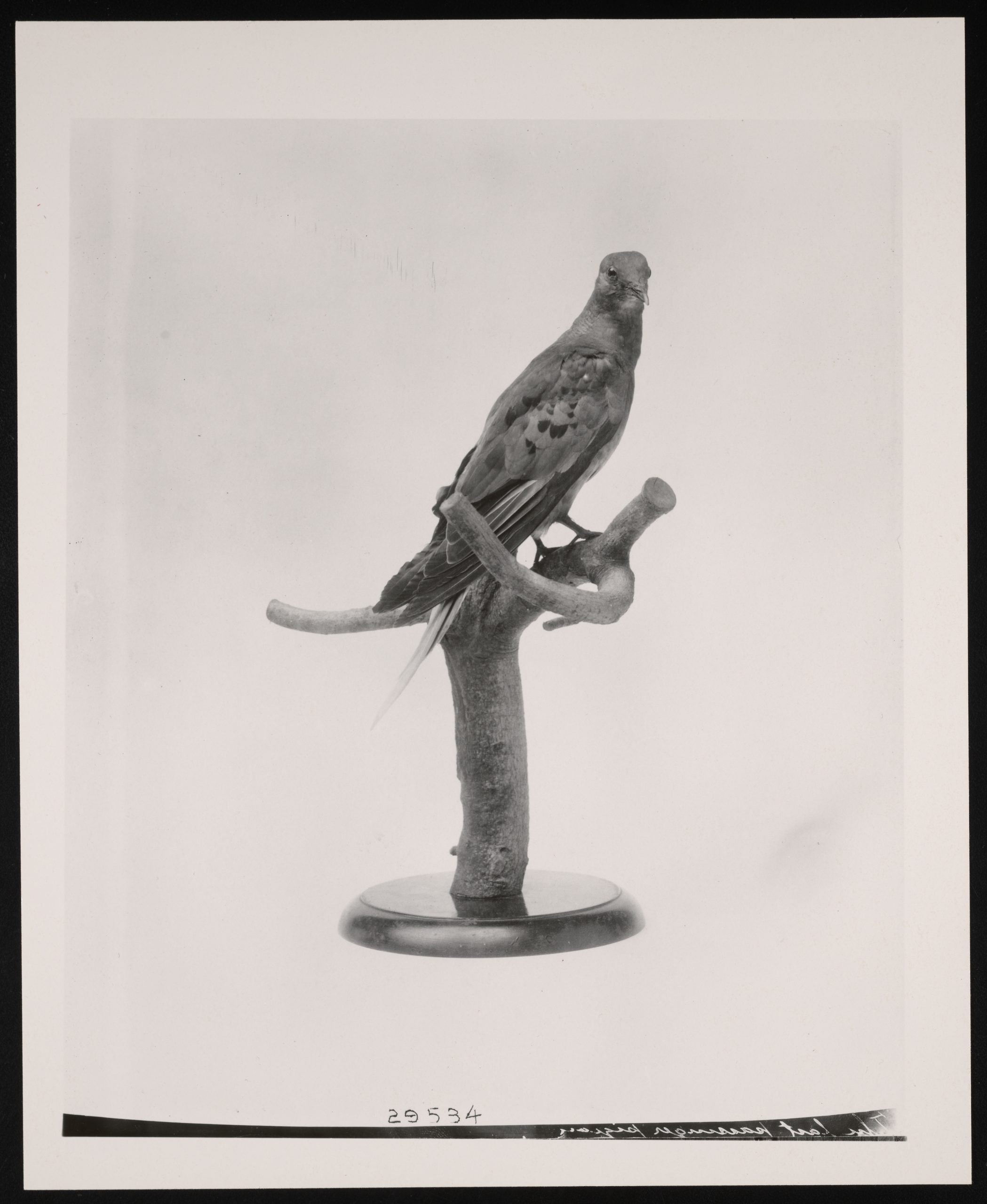
The extinction of the most populous bird in North America became a symbol of the end of the frontier and America’s transition into modernity. The pigeon was assigned the same rhetorical position as the bison, and indeed, the colonial view of Native nations: tragic figures, anachronistic in our modern world, and doomed to extinction as the march of civilization’s progress transformed the landscape and the American people. The idea that human action had caused the pigeons’ extinction was only beginning to be reckoned with, as popular narratives conceived of it as simply a passive natural process.
A number of North American birds were driven to extinction in this manner in the early 1900s, including the Carolina parakeet (the last captive individual died at the Cincinnati Zoo in 1918)37 and the eastern heath hen (the last known individual died in 1932).38 However, the very visible extinction of the passenger pigeon helped galvanize conservation efforts to protect other critically endangered species: The whooping crane and trumpeter swan were able to rebound thanks to human intervention. Even the wild turkey was considered at risk of extinction during the early 1900s but has rebounded significantly.39
Advances in biology occasionally promise the de-extinction of the passenger pigeon: the idea that through DNA editing, a passenger pigeon can be born from another species’ egg. But this neglects the fact that the vast forests of mast-bearing trees that sustained the pigeons are gone. Part of the success of the reintroduction of species like the bison has been due to the restoration of the prairie environment the animals need to thrive, as well as the partnership with Native nations that ensures responsible land stewardship. While idealistic, de-extinction is an incomplete solution to a systemic problem. Our modern built environment is not even compatible with the birds that have managed to survive: North American bird populations are down by nearly thirty percent since 1970.40
In 1890, a taxidermic passenger pigeon was displayed in the Minneapolis Downtown Library. Those younger than ten or so might not have ever seen a single one, let alone the majestic flocks that blacked out the sky. The St. Paul Globe observed:
The wild pigeon which was a one time so plentiful in Minnesota has become such a rarity that numbers of the visitors at the library wonder what kind of a bird that beautiful little one is with the ashes-of-rose breast and the glitter of molten gold around its neck. In the language of Rip Van Winkle: how soon we are forgotten when we’re gone.41
The passenger pigeon was driven to extinction because colonial expansion was incompatible with the ecological environment needed to sustain the flocks. Its most lasting presence is as a largely unheeded lesson: No species is so numerous or so successful that it cannot go extinct.
Jennings Mergenthal is a public historian, whose work often centers sites of contested history and what happens when once ubiquitous things vanish. They hold a Masters of Heritage Studies and Public History from the University of Minnesota. In preparation for this article, they made a pigeon pie based on a recipe from the 1850s. It turned out pretty well.
Notes
- “Lunch at the Star and Garter ToDay,” Saint Paul Daily Press, April 22, 1864, 6; “Star and Garter Saloon,” Saint Paul Daily Press, January 10, 1864, 10; “Star and Garter,” Saint Paul Daily Press, April 16, 1864, 4.
- “Among First Residents,” Saint Paul Daily Globe, May 12, 1901, 25.
- “One Day Last Week,” Weekly Pioneer, July 12, 1863, 3; Lafayette Bunnell, Winona and Its Environs on the Mississippi in Ancient and Modern Days (Jones & Kroeger, 1895), 186.
- A. W. Schorger, The Passenger Pigeon: Its Natural History and Extinction (University of Wisconsin Press, 1955), 204.
- Unpublished A. W. Schorger notes.
- Ben Jacob Novak, “Deciphering The Ecological Impact Of The Passenger Pigeon: A Synthesis Of Paleogenetics, Paleoecology, Morphology, And Physiology” (M.A. thesis, UC Santa Cruz, 2016), 6, https://escholarship.org/uc/item/3260s35t; Schorger, The Passenger Pigeon, 31.
- Bunnell, Winona and Its Environs, 187.
- Chih-Ming Hung, Pei-Jen L. Shaner, Robert M. Zink, et al., “Drastic Population Fluctuations Explain the Rapid Extinction of the Passenger Pigeon,” Proceedings of the National Academy of Sciences 111, no. 29 (2014): 5.
- E. S. Seymour, Sketches of Minnesota: The New England of the West (Harper & Brothers, 1855), 136.
- “Wild Pigeons,” The Daily Minnesota Pioneer, July 31, 1854, 2; A. W. Schorger unpublished notes.
- Joel Greenberg, A Feathered River Across the Sky: The Passenger Pigeon’s Flight to Extinction (Bloomsbury, 2014), 80.
- “Don’t Believe it,” Chatfield Democrat, May 2, 1863, 3.
- “Pigeons,” Chatfield Democrat, May 7, 1864, 3.
- Greenberg, A Feathered River Across the Sky, 104-107.
- “Pigeons,” Chatfield Democrat, May 20, 1865, 3; “Hatching,” Chatfield Democrat, May 14, 1864.
- “Be Careful,” Chatfield Democrat, May 27, 1865, 3.
- “Wild Pigeons,” Chatfield Democrat, May 15, 1875.
- Ibid.
- “A number of our citizens,” Dodge County Republican, June 11, 1869, 1.
- W. B. Mershon, The Passenger Pigeon (The Outing Publishing Company, 1907), 56.
- “Squabs,” Chatfield Democrat, June 10, 1865.
- “Quite a Business,” Chatfield Democrat, May 15, 1875, 3.
- Schorger, The Passenger Pigeon, 217.
- “The Herald tells,” Rochester Post, May 20, 1871, 2.
- “Pigeon Shooting,” Wabasha Herald, May 11, 1871, 4.
- “Sporting,” Milwaukee Journal Sentinel, July 19, 1875, 5; A. W. Schorger unpublished notes.
- “Where are the Pigeons?” Minneapolis Daily Tribune, July 3, 1868, 4.
- “The Wild Pigeon Crop,” Rochester Post, May 13, 1876, 3.
- Greenberg, A Feathered River Across the Sky, 191.
- “Wild Pigeons,” Chatfield Democrat, April 26, 1879, 3.
- “Bird Law,” Mower County Register, May 30, 1867, 4.
- “The Sporting Club,” Lake City Leader, April 1, 1876, 5; Forrest B. Lee and John B. Moyle, Waterfowl in Minnesota: Technical Bulletin No. 7 (Minnesota Department of Conservation, Division of Fish and Game, 1964), 202.
- “No more birdsnesting,” Wabasha Herald, May 6, 1891, 4.
- “Dog and Gun,” Minneapolis Tribune, December 29, 1895, 4.
- A. W. Schorger unpublished notes; Greenberg, A Feathered River Across the Sky, 162.
- “Among First Residents,” Saint Paul Daily Globe. May 12, 1901, 25. A biography of Hoyt’s father, Benjamin Hoyt, may be found in the Fall 1966 Ramsey County History.
- Mikko Saikku, “The Extinction of the Carolina Parakeet,” Environmental History Review 14, no. 3 (Autumn 1990): 6.
- Matthew Kamm, “The Life and Death of the Heath Hen,” Bird Observer 43, no. 1 (2015): 12.
- “Slaughter of the Song Birds to Cease,” Duluth Evening Herald, May 26, 1900, 9; Thomas Hughes and Karen Lee, “The role of recreational hunting in the recovery and conservation of the wild turkey (Meleagris gallopavo spp.) in North America,” International Journal of Environmental Studies 72 no. 5 (2015): 801.
- Kenneth V. Rosenberg, Adriaan M. Dokter, Peter J. Blancher, et al., “Decline of the North American Avifauna,” Science 366, no. 6461 (2019): 120, https://doi.org/10.1126/science.aaw1313.
- “Minneapolis All Sorts,” Saint Paul Daily Globe, March 23, 1890, 12.
- Year
- 2026
- Volume
- 61
- Issue
- 3
- Creators
- Jennings Mergenthal
- Topics