
Growing Up Dos Culturas
- Year
- 2026
- Volume
- 61
- Issue
- 2
- Creators
- Frank M. White
- Topics
by Frank M. White
When I think back on my family history, where do I begin? I was born in November of 1945, which seems like a long time ago, into a bicultural family: African American and Mexican American. Over the years, this has provided me with some interesting experiences. Sometimes people would look at me and ask, or suggest that I was something other than what I am.
My family lived first at 1088 North Dale Street, and I attended Como Elementary School from kindergarten through fourth grade. Then when I entered fifth grade, we moved to 409 St. Anthony Avenue in the Rondo neighborhood, where my father, Louis V. White Jr., had grown up. My mother, Fidela C. Rangel, had grown up on the West Side Flats, after arriving here in 1928 via from Mexico via Kansas, but they had this in common: Rondo and the West Side were diverse communities, where people had good relationships with their neighbors.
Probably because we lived in the Rondo community, everyone considered me African American, but few knew or considered me Mexican. When I was growing up, it didn’t really matter to me: I was just a kid who enjoyed playing baseball, learning, and being with family. This story is about my growing up as a part of the Rangel family, which I’m immensely proud of—both of my cultures and families. Both families were respected in the communities in which they lived.
My memories of my Rangel grandparents really didn’t begin until I entered the fifth grade. My father now had a car, a blue Packard, and this would allow us to travel to the West Side, through downtown and across the Mississippi River. I always loved seeing my mom’s family, because it meant driving through downtown and seeing all the large buildings, and then across the Robert Street Bridge and the stores that lined the street entering the West Side Flats. What an adventure for me, just seeing things along the way and the places in the flats that I didn’t see every day.
On this drive, I knew that I would see my abuelo and abuela de Rangel and tíos and tías. I was always excited to see Grandpa Francisco and Grandma Cresencia, or, as they were known in the neighborhood, Don Francisco and Donna Chencha. At that time, I didn’t have any idea how important my grandparents were to the community on the West Side Flats. Because I was just a kid and they only spoke Spanish, I could understand just a little bit.
At nine or ten years old, I could appreciate seeing my relatives! But looking back, little did I know how important this would become in my life’s journey, as I would continue to learn more about this side of my family over the course of my life. I would later find out, as a teenager, that my grandfather was someone who always stood up and helped Mexicans with their rights in Minnesota, so much so that he would serve as a representative of the Consulate of Mexico.
A short time ago, I had lunch with my friends and long-time West Side Flats residents Don Luna, Tony Ruiz, and Larry Luico. I asked them if they had any memories of the family. They remembered my uncle Kico’s band playing for all the dances, weddings and quinceañeras.1 Tony Ruiz remembers my uncle Kico playing at his wedding, at Fourth of July celebrations, and for backyard dinner parties.
Recently I attended the funeral of Genevieve Gaona-Rangel, my mother’s last living sibling. As I listened to the homily about my tía, Genevieve, I was touched. It reminded me not only about how great she was, but about all my mother’s siblings and how they had touched my life.
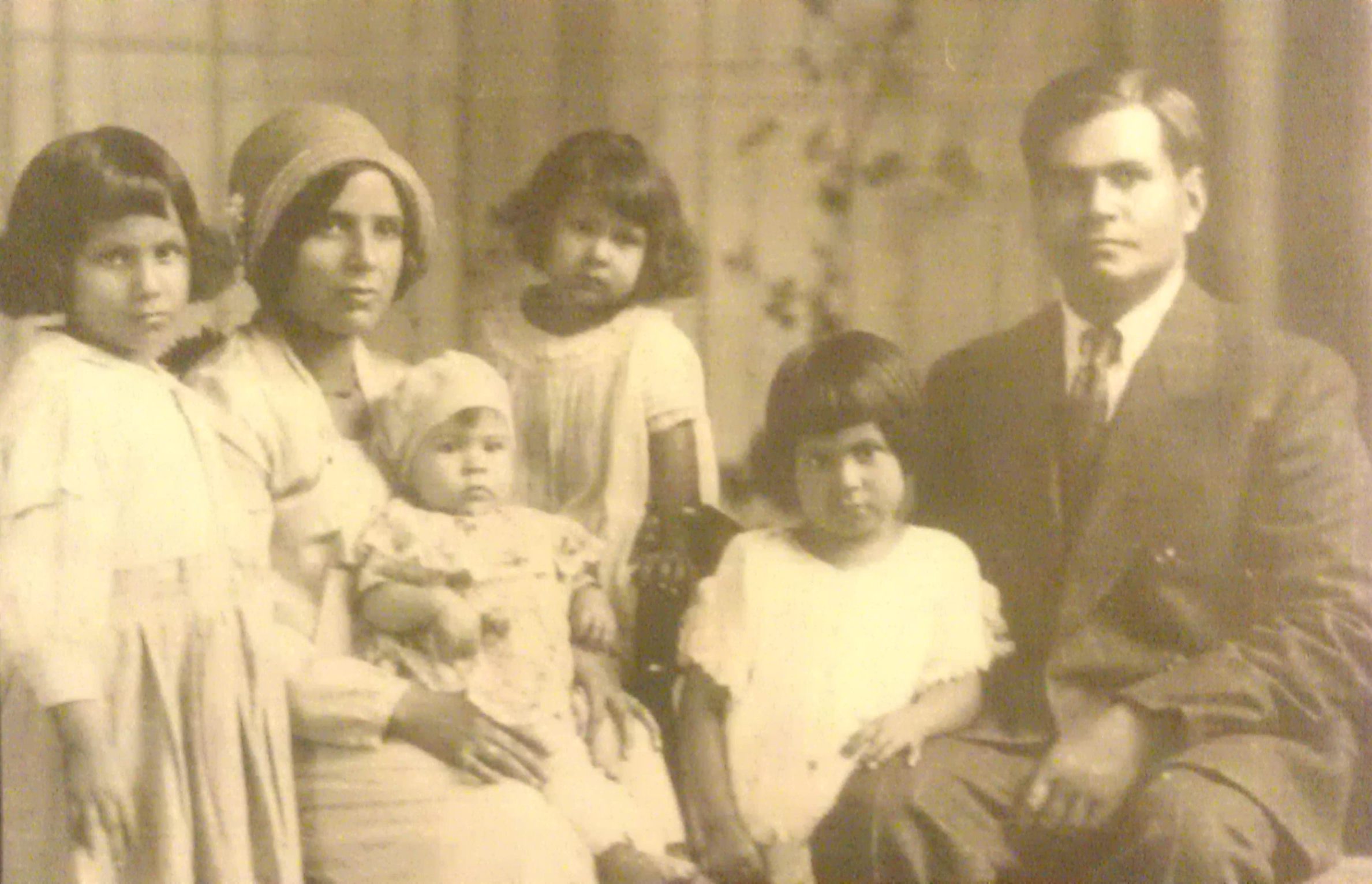
The Journey from Mexico to St. Paul, 1927
My grandparents, Francisco and Cresencia, met through Cresencia’s brother Euglio, while they were both working for the railroad in Aguascalientes. After a period, Francisco fell in love with Cresencia and asked for her hand in marriage, which was the custom. They were married on January 23, 1921. They would have four children while in Mexico: Juanita was born on October 12, 1921, followed by Nicolas, Fidela, and Eugenia. Nicolas would die within a few months of his birth, reasons unknown.2
Sometime later, my grandfather Francisco decided to take a six-month leave of absence from the railroad and planned a trip to visit Cresencia’s aunt in Juarez. After a weeklong visit, the family decided to visit another aunt in Topeka, Kansas. Passports were arranged.
When they arrived at the border, they had to go through a process where each person was sprayed with some type of powder, possibly some type of disinfectant. Once on the train, they realized everyone spoke English, which created difficulty because the family only spoke Spanish. The family was hungry and they didn’t know how to ask to buy food, so my grandfather would stop the vendors, point at what he wanted, and hold his hand out with the money. The vendors would take the money; he had no choice but to trust them to be honest.3
The family lived in Topeka for a couple of months, before a part-time job with the railroad brought them to Pomona, Kansas. After a few months there, they heard from family in Mexico that Eulogio had moved to Minnesota. He said there was lots of work and Francisco should bring the family to Minnesota.
The family packed up, and in May 1928 they arrived in St. Paul.4 My aunt Juanita remembers looking out the window of the train, seeing a bridge with two arches, and being struck by how big and beautiful it was. The family settled in with Eulogio and Tomasita, where they would live for a year and a half, and then one week after the family arrived, my grandfather was hired by Cudahy Packing Company. In 1929, the Depression came and Grandpa was laid off from work. At this time, Grandma had another baby, my uncle Augustine.
Then Grandpa Francisco found work with the American Sugar Company. The company was in Chaska; the job was in the sugar beet field. Grandpa Francisco and Uncle Eulogio signed a contract with them: thirty acres of land in exchange for sugar beet crops. The company provided transportation and moved the family to Bird Island, Minnesota.
The work was hard labor. First was the planting of the seeds, then the thinning of the plants once they were bigger, so there were one or two plants every twelve inches. When the plants were big and ready to harvest, they chopped the top of the beets where the leaves were and then threw them out on the next aisle. The farmers would pick them up and take them to the factory to make sugar.
While living in Bird Island, there was an accidental fire in the corn crib where the family was living.5 The farmer was so mad he told them they had to fend for themselves—no more place to live. Luckily, neighbors from Bird Island heard about the fire and brought blankets and a large tent so the family had some protection from the elements.6 The year was 1931.
While they were living in Bird Island my aunt Genevieve was born, but they completed the contract and Grandpa was called back to work in St. Paul, so the family moved back to the city. Shortly thereafter, in 1932, tío Eulogio and tía Tomasa departed back to Mexico along with their five children.7 As a policy to encourage self-deportation, the state of Minnesota would pay to send any immigrant living in Minnesota back to their country of origin. They took the offer.
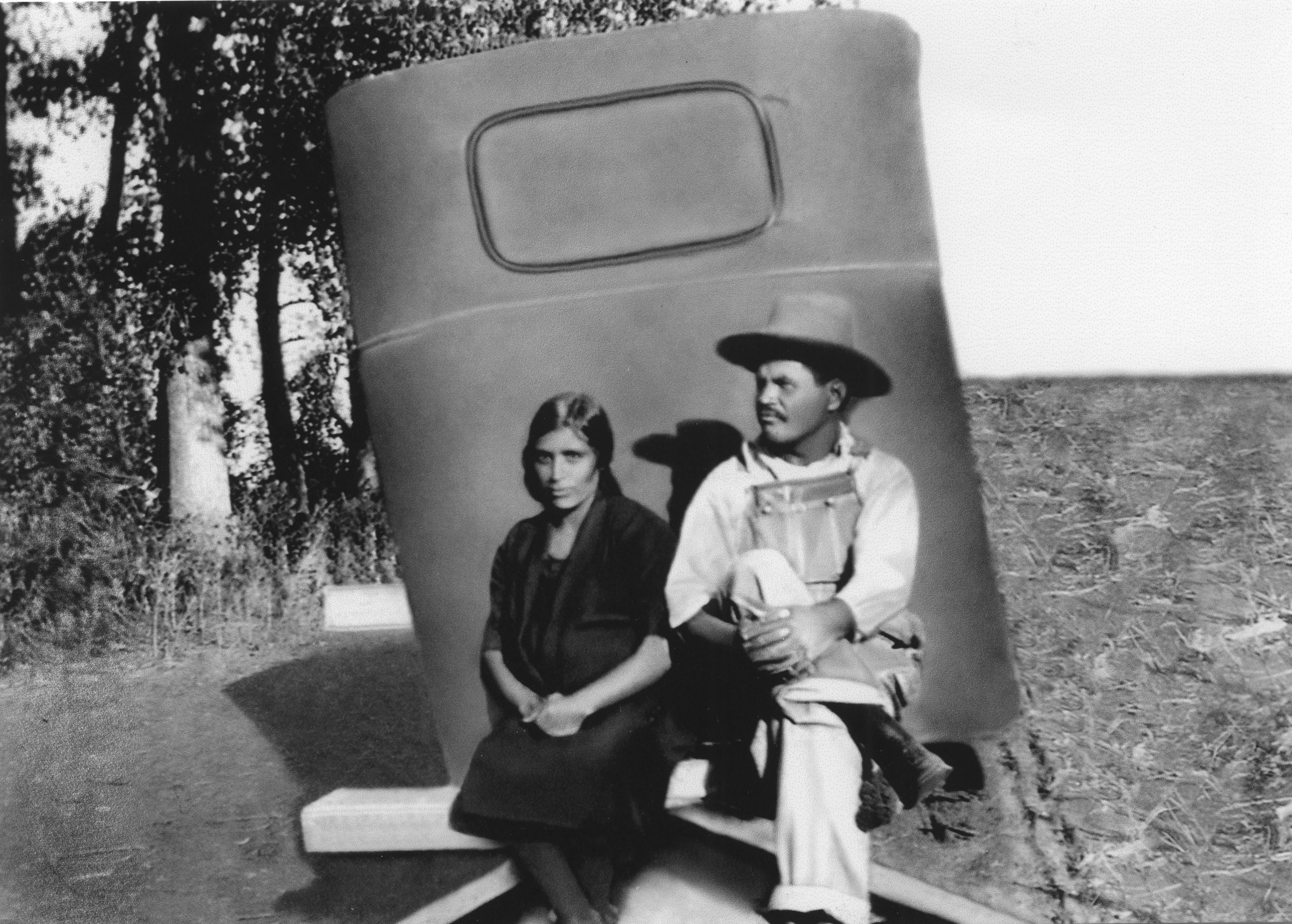
At Home with Don Francisco and Donna Chencha
The Rangel family had lived in several homes in the area: They had first lived on Eaton Street in front of a movie theater called the Red Mill, before moving to Indiana and Kentucky Streets. After living in Bird Island as migrants, the family moved back to the West Side on State Street across from the city dump. In 1932 they moved to Plato Boulevard, and in 1936 to 252 ½ Fairfield Avenue. The last family home on the West Side Flats was at 175 Eva Street, a few blocks from Our Lady of Guadalupe Catholic Church.8
For holidays and everyday visits, we would travel to my mother’s family home on the West Side, and we would be welcomed by my grandparents. I remember my first sight of my Grandpa Francisco Rangel was when they lived upstairs at 252 ½ Fairfield. There were shops on the street level, and as I learned later, a bar right under their apartment.
There were times when we would visit my grandparents, and a man would be at the house. I would ask my mother, “Who’s that?” She would explain that my grandparents would help some individuals when they arrived from Mexico until they could find work and a place to live.
One of the intersections that I remember most was Fairfield Avenue and Eva Street. On one corner was Our Lady of Guadalupe Church and across Eva was La Casa Coronado, one of the first Mexican restaurants in Minnesota. Directly across Coronado’s on Fairfield was the New Ray Theatre, and across the street from the movie theater and the church was the park and playground called the Lumber Yard.9
At this early age, my memories were mostly of visits to their home and my grandmother always saying, “Pasale,” or, “Come in,” in Spanish. Her next comment would always be “¿Tu queries comer?” or, “Do you want something to eat?” Even as I grew older, this was always her comment! Even talking with my cousins, they also remember Grandma always asking if we were hungry.
I observed that Grandpa always had jalapeños or chiles when he ate. In fact, one time he said to me, “¿Tu queries dulches?” suggesting sweets or candy, and then gave me a pepper. I took one bite and that was the end of that! My mom always said that’s why I like hot things today.
I loved my grandma’s enchiladas and tamales and always wanted her fresh-made tortillas. I also watched sometimes when she ground corn in a molcajete to make corn tortillas or tamales. My mother would use one occasionally, but Grandma would do it all the time. I loved flour tortillas but always wanted Grandma’s corn tortillas.
My generation of the Rangel family includes fifty-one first cousins, plus more if you add spouses, so the stories could be endless. My prima Sarita (Chari) Gaona-Nickman, Genevieve’s daughter, remembers our grandmother Cresencia this way: “If she wasn’t in the kitchen cooking, she was busy crocheting beautiful layette sets for newborn babies. She also crocheted me a golden yellow and white dress when I was in the seventh grade.”10 My prima Marisa Kelly, Rachel’s daughter, recalls: “I would help Grandma in the kitchen making dough for tortillas and I would also read letters that Grandma would receive from family in Mexico. Grandma would tell me that it was a good way to learn Spanish.”11
Sometimes my grandparents would share stories, reminiscing about Mexico. One of those stories was about my grandfather being hidden in the hills to avoid being taken by the Federales into the army. Or there were stories of Pancho Villa coming into their town and throwing money at the residents living there.
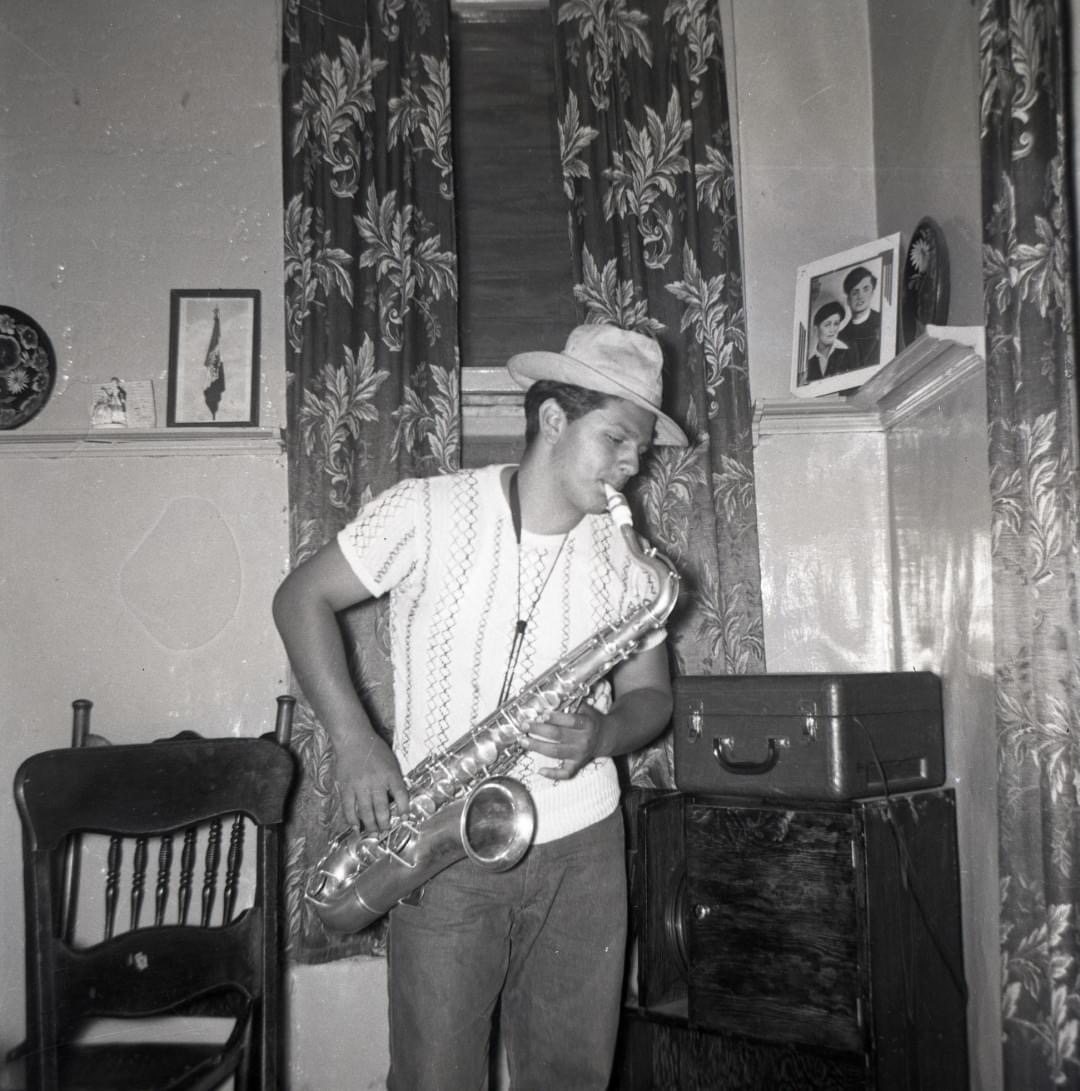
By the time our family would visit the grandparents’ home, most of my aunts and uncles were adults, and I would only see them occasionally. Kico, Genevieve, and Rachel still lived at home. I really liked hearing Kico playing his saxophone. Sometimes, his friends would come over, and they all played some musical instrument.
Community Anchors
There were two anchors on the West Side that the family became involved with: Our Lady of Guadalupe Catholic Church, and the Neighborhood House, which provided social services, entertainment, dances, a place to socialize for youth, and a meeting place for the adults.
The Anáhuac Mutual Benefit and Recreation Society, founded in 1922, provided a safe place for immigrants to gather. It offered advice about the neighborhood, announced employment opportunities, and nurtured the local culture. For dues-paying members, it also provided sickness and funeral benefits.12 My grandfather Francisco would become the informal leader and secretary of this organization for many years.13
There were many times when the Mexicans living in Minnesota had to collaborate with local officials to resolve issues. For example, sometimes farmers or railroads did not honor the labor conditions stipulated by the Bracero Agreement and mediation was needed. In such cases, Anáhuac seemed a natural representative of the community; however, group action on the part of Mexicans was difficult. Therefore, responsibility for community concerns fell to a prominent leader, chosen both for his moral qualities and his diplomatic skills. The immigrants counted on someone who could work with both Mexican and United States officials to resolve problems in a legal and undisruptive manner.
The man who became the informal leader of the Mexicans in Minnesota was Francisco Rangel. Unlike leaders in many ethnic communities, Rangel was no “immigrant entrepreneur” or successful businessman, but a laborer at Cudahy’s Packing Plant in St. Paul. Nevertheless, he was educated and had experience in administration. Equally important, he had the drive and the dedication to work toward achieving better treatment for Mexicans in Minnesota. His activities on behalf of the community occupied much of his free time, but he never received any monetary compensation for his efforts.
Soon he had written enough letters to force the government to treat his requests seriously, and he was appointed the Honorary Consular Representative in St. Paul. The title gave him authority to approach local officials of the US government in St. Paul, although he still had to work through the nearest Mexican consulate in Chicago.14
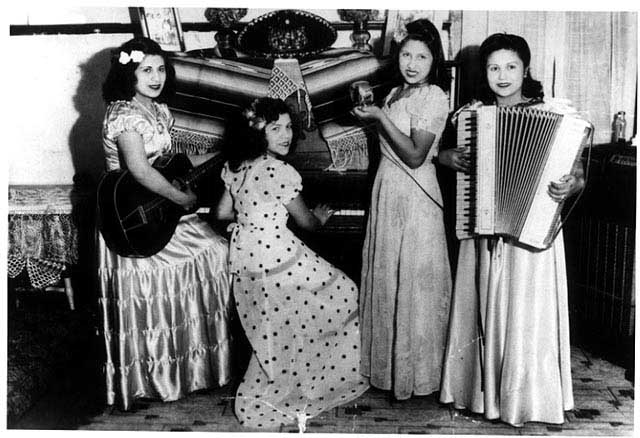
Keeping Traditions on the West Side
Francisco and Cresencia were known as West Side “keepers of culture.”15 The family kept two pianos and other musical instruments in the apartment, which the children could learn. They would organize celebrations for Mexican holidays16 and stage plays with neighborhood children, including scripts written by Francisco and songs and dances taught by Cresencia.17 As documented in Latino Minnesota, “Music was something the entire Rangel family shared with the community, as they performed at social and church events, to the pleasure of all those who remember. In a 1976 interview, Juanita Rangel de Moran said, ‘My father would say that he did this so that the young people could learn and preserve important aspects of our Mexican culture.’ ”18
Growing up, listening to my tías singing and my tío Kico practicing at home was just the usual for me. It was only later, as I moved through my journey, that I learned how popular the Rangel family had become. They were known as the first Latino musical family in Minnesota, as friend Richard Aguilar reported in Kico’s obituary.19 My uncle Kico had been encouraged by his sister Eugenia to pick up the saxophone as a teenager,20 learning songs from family and neighbors as well as a local music shop. His sisters performed as a group called Las Hermanas Rangel, and Kico formed a band of his own that played “Mexican polkas . . . tango, cumbia, merengue, samba, and mambo.”21 They were part of the “West Side Sound,” a hybrid of Mexican and American, popular and traditional music.22
A City Pages feature in 2005, more than sixty years after the sisters’ breakthrough, confirms that “the Rangels’ influence was deep.”23 I can remember my mother sharing all the time that Kico’s bands were playing all over the Twin Cities, places like the Manor in St. Paul, the Calhoun Beach Club and Hotel in Minneapolis, summer concerts for Park and Recreation Departments. Later on, I even hired his band when I was the Manager of Recreation in Richfield, because they were always requested to be a part of the summer series.
I’m not exactly sure when I first saw this photo of my mother singing with her sisters. I didn’t know she had done that, and had to confirm with my tía Juanita that my mother had sung with the group until she married my father. They would also sing in the choir at our Lady of Guadalupe Catholic Church. My tía Genevieve, who had a beautiful voice, would continue to sing with the choir; they were even invited to sing at the Vatican once.
Neighborhood Divisions
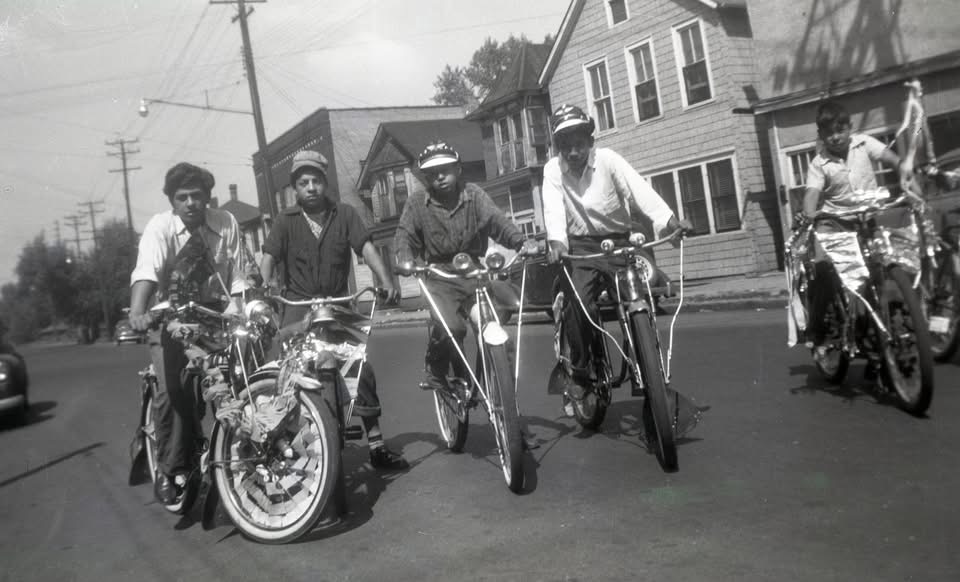
I remember when I was eleven or twelve, I came home one day to find my uncle Kico visiting, and my mother said, “There’s something in the back for you.” I went out the back door and there was a great-looking Schwinn bicycle; later I would find out that it was my uncle’s. This bike was all dressed up and even had a key to lock the front tire. All my friends were impressed with this bike, and it made me feel special because I knew my parents couldn’t afford to purchase a bicycle for me without buying one for my sisters also.
Every spring, the river would flood and going to the West Side became difficult. Homes would be surrounded by water, and in some places, even in the water. I remember my uncle Kico and a couple of friends taking me and my cousins out on a raft in the flood waters. The housing stock could not withstand annual floods, and in 1956 the city announced that the entire area would become the Riverview Industrial Park. Between 1961 and 1963, the city bought and tore down all the houses in the neighborhood, displacing the residents.24
It’s now interesting to me that at the same time, the Rondo neighborhood was also being torn down to make room for I-94. So this meant that both parts of my family had to move and find another place to live. As a youth it meant that my friends moved, and I didn’t always know where they moved to. But for my parents and family it was more stressful; it was hard to find a place because of bias on both sides of the river.
It was only in time that I learned about the accomplishments of my grandfather Francisco and my grandmother Cresencia. Another challenge that I would find out later was that some of my mother’s siblings didn’t approve of whom she married, and this also created a distance. I really feel sad for my mother, because all of us need our family connections, and I’ll never know how this really made her feel. I also know that my father kept his distance for obvious reasons. But whenever we visited my grandparents’ home, we felt welcome and were treated well at the time, like family.
After graduating from high school, my cousins Sal (Chucho), Victor, Marie, and I started to hang out together, and without a plan this brought the families back together. I know that many of the younger family members today don’t know about this part of the story. Today our large Rangel family is extremely diverse; in fact, at our most recent reunion, I had to ask some of the younger folks, “Are we family?” I only mention this because it’s a part of the story, but today, watching all the family interactions, you would never know.
Remembering the Legacy
The Rangel family is still known in Minnesota. The Minnesota Historical Society has oral interviews with family members, including Cresencia, Juanita, and Kico, in its archives.25 The History Center did an exhibit on the West Side Flats, which featured several families, including the Rangel family, and the History Theatre even premiered a play about the Rangel family in 2001, titled Los Rumbaleros.26
And today, Juanita’s daughter, my cousin Rebecca Moran-Cusick, leads Los Alegres Bailadores, a Twin Cites-based Mexican folkloric dance group. In fact, my oldest daughter Rebecca, my niece Denise, and my youngest sister Felicia all dance with this group. It also includes many of our family’s next generation of children.
Looking back, I’m so proud of my place in the Rangel family and the legacy started by my grandparents on the West Side. Growing up, I didn’t realize how much they helped others, but after hearing many stories and researching information at the History Center, I’m amazed at what they did. They didn’t have much, so it wasn’t like they were sharing out of affluence; they were sharing what they had every day to survive and live in the US.
In 2006, I was hired for a special project by Dave St. Peter, President of the Minnesota Twins, to begin increasing their diversity as they prepared for a new stadium. The intent was to meet with representatives from the Latino, African American, and Native communities. At one of the meetings, I was introduced to Jesse Bethke Gomez,27 President of CLUES (Comunidades Latinas Unidas En Servicio). I recognized his last name and asked him if his mother’s name was Irene. He answered yes, and then I shared that according to his mother, my grandfather and his grandfather knew each other in Mexico. With a look of surprise, he turned to Dave St. Peter and said, “Thank you for the opportunity to meet today,” and then he stood up, reached across the table, shook my hand, and said, “I’m honored to meet the grandson of Don Francisco Rangel!” I couldn’t believe it. I had never met this man, and here it was, forty-plus years after my grandfather’s death, being reminded how respected he was. I’ll never forget that feeling of pride!
One of my greatest acknowledgements in life was being honored, along with my tío Kico, with the La Familia Heritage Award at the seventeenth annual La Familia Latino Heritage Celebration. With a few family members present, this was extremely important to me because it confirmed my connection with the Rangel family to the larger St. Paul community. It also celebrated my mother, Fidela, through her oldest son. My cousin Becky Moran-Cusick reminded me that the traditions started by our grandparents Francisco and Cresencia have been handed down for five generations in our family. That’s surely what Francisco and Cresencia wanted: keeping their Mexican traditions alive, acknowledging their contributions to the culture, and continuing their love through family!
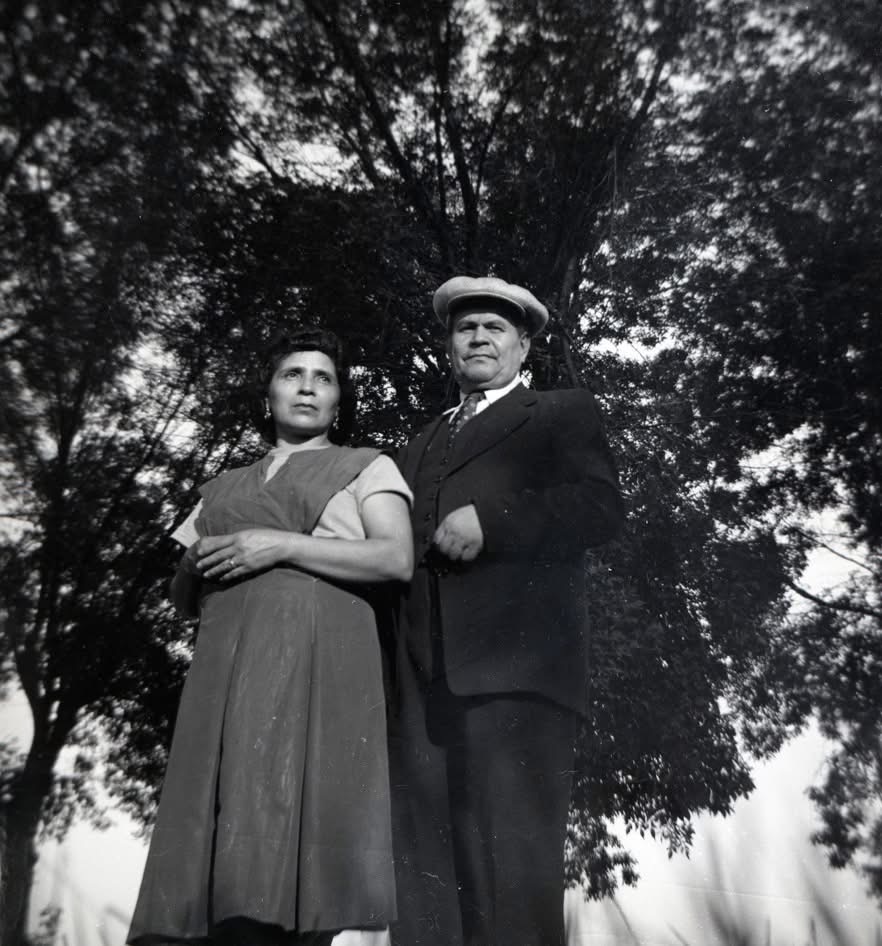
Frank M. White is a Rondo elder, author, and historian. He’s currently serving his third term on the State Historic Preservation Review Board and is a board member of Historic Saint Paul.
Notes
- A quinceañera is a traditional coming-of-age celebration marking a girl’s transition from childhood to womanhood. It combines a religious mass with a lavish reception featuring a formal dress, a court of honor, traditional dances, and symbolic rituals, such as the change of shoes.
- Juanita Rangel-Moran, “My loving and adorable children,” unpublished manuscript, n.d.
- Juanita Rangel-Moran, “Rangel History,” unpublished manuscript, October 2003.
- Ibid.
- Ibid.
- Rangel-Moran, “My loving and adorable children.”
- Ibid.
- Don Luna, in discussion with the author.
- Ibid.
- Sarita Gaona-Nickman, in discussion with the author.
- Marisa Kelly, in discussion with the author.
- Leigh Roethke, Latino Minnesota (Afton Historical Press, 2007), 32.
- Francisco ‘Kiko’ Rangel, interviewed by Grant A. Moosbrugger, Mexican-American Oral History Project, Minnesota Historical Society, August 4, 1975, https://collection.mndigital.org/catalog/p16022coll548:1291.
- Sarah Chambers, “Mutual Cooperation and Local Leadership Among Mexican Immigrants in Minnesota, (senior thesis, Carleton College, 1985) 52, Minnesota Historical Society F613S9M536, April 1985.
- Roethke, Latino Minnesota, 32.
- Jackie Renzetti, “Music History Spotlight: Las Hermanas Rangel,” The Current, March 17, 2016, https://www.thecurrent.org/feature/2016/03/17/music-history-spotlight-las-hermanas-rangel.
- Roethke, Latino Minnesota, 33.
- Roethke, Latino Minnesota, 33-34.
- Zoe Jackson, “Francisco ‘Kico’ Rangel, ‘icon’ of Minnesota Latino community, dies at 87,” Minneapolis Star Tribune, August 9, 2023.
- Renzetti, “Music History Spotlight,” The Current.
- Roethke, Latino Minnesota, 68.
- Ibid.
- Peter S. Scholtes, “Summer Music Guide,” City Pages vol. 26, no. 1279, June 2005.
- Paul Nelson, “West Side Flats, St. Paul,” MNopedia, March 30, 2015, last updated August 14, 2025, https://www.mnhs.org/mnopedia/search/index/place/west-side-flats-st-paul.
- Crecencia Rangel, interviewed by Victor Barela, Mexican-American Oral History Project, Minnesota Historical Society, July 2, 1975, https://collection.mndigital.org/catalog/p16022coll548:1333; Juanita R. Moran, interviewed by Victor Barela, Mexican-American Oral History Project, Minnesota Historical Society, July 31, 1975, https://collection.mndigital.org/catalog/p16022coll548:854.
- Los Rumbaleros, by Maya López-Santamaría, dir. Ron Peluso and Maya López-Santamaría, musical dir. “Nachito” Herrera, History Theatre, St. Paul, MN, April 21-May 27, 2001, https://historytheatre-first40.com/2000-2001/.
- Irene Gomez-Bethke was the founder of Centro Cultural Chicano and Instituto de Arte y Cultura in Minneapolis.
- Year
- 2026
- Volume
- 61
- Issue
- 2
- Creators
- Frank M. White
- Topics