
A Tale of Two Lots: The Smith Family’s Path to Frank Street
- Year
- 2026
- Volume
- 61
- Issue
- 2
- Creators
- Jeremiah E. Ellis
- Topics
View this online sidebar as a PDF.
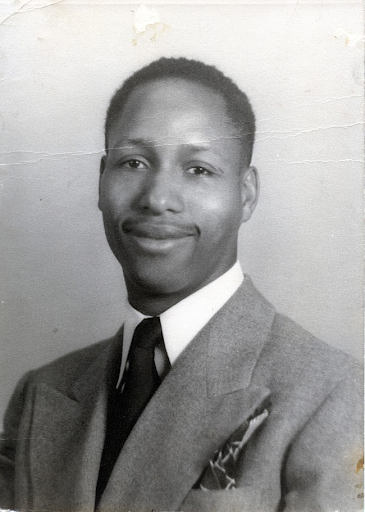
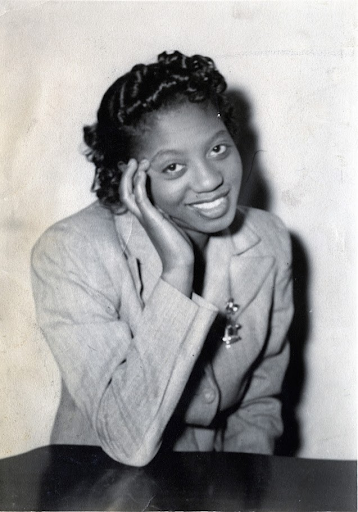
In 1956, Silas and Roxie Smith began their arduous journey to secure a foothold in Maplewood. The Smiths overcame exclusionary real estate practices and restrictive covenants to build their modern rambler. Their persistence paved the way for four generations of their family on Frank Street, transforming a site of initial hostility into a lasting legacy of Black suburban belonging. Photos courtesy of the Smith family.
A Tale of Two Lots
The Smith Family’s Path to Frank Street
Jeremiah E. Ellis
While James and Frances Hughes were strategically platting their ten-acre enclave on Sandhurst Avenue, other Black families—less likely to be mentioned in the St. Paul Recorder—such as the Smiths were navigating the unspoken red tape of Maplewood through sheer persistence. In 1956, Silas and Roxie Smith lived in St. Paul’s vibrant Rondo neighborhood, but the impending construction of I-94 threatened to gut their community. Seeking a future in the suburbs, the Smiths targeted lots in Maplewood, only to be met with blatant evasion; a realtor, after spotting the Black family from his car, drove past their meeting spot twice and never returned their calls.1 Because 1940s-era restrictive covenants explicitly barred selling to “Black, Semitic, or Mongolian” buyers,2 chilling the market throughout Ramsey County and across the United States, the Smiths had to rely on a white contractor to purchase eight lots on Frank Street on their behalf.3
Even after securing the land, the transition was fraught with hostility. Building their home required navigating a “sticky” city council and facing a neighbor who brandished a firearm and hurled epithets whenever they visited the site. Nevertheless, by 1961, the Smiths completed a modern, four-bedroom rambler equipped with the latest built-in brown appliances and a dining room large enough for eighteen.4 Their daughter, Gwen, recalls the sting of local prejudice—such as being told to leave a friend’s house before the father returned—but the family’s resilience ultimately transformed the neighborhood.5 Today, four generations of the Smith family have called those Frank Street lots home, turning a site of initial exclusion into a permanent legacy of Black suburban belonging.6
Notes
- Roxie Smith, “Suburban Trailblazers: The Smith Family,” Suburbia (Minnesota History Center, 2015).
- “Racial Discrimination in Maplewood,” 60 Stories of Maplewood History (Maplewood Area Historical Society, 2017).
- Roxie Smith, “Suburban Trailblazers.”
- Gwen Smith Ellis, “Suburban Trailblazers: The Smith Family,” Suburbia (Minnesota History Center, 2015); Maplewood Area Historical Society, “Racial Discrimination in Maplewood.”
- “Racial Discrimination in Maplewood,” 60 Stories.
- Brenda Rudberg, “Racial Discrimination in Maplewood” (Maplewood Area Historical Society, 2014).
- Year
- 2026
- Volume
- 61
- Issue
- 2
- Creators
- Jeremiah E. Ellis
- Topics