We Should All Be Public Historians
- Year
- 2026
- Volume
- 61
- Issue
- 3
- Creators
- Kylie Linh Hoang
- Topics
by Kylie Linh Hoang
My history education began in a very ordinary classroom with a whiteboard and a large world map. I remember reading atlases and encyclopedias and diligently copying down dates and names into my notebooks for future study. I understood that I needed to get good grades to get into a good college to get a good job and build a good life. I did not understand why I needed to take history classes to do it, though. Of the “good” jobs that I was aware of as a child, it wasn’t immediately clear to me what role, if any, learning history played in them. Did medical doctors ever study history? Did lawyers and astronauts? Do you have to know history to be the president? I know now that, yes, all of these professions likely require at least some history education, but It wasn’t until I started college that I began to unpack why that was important.
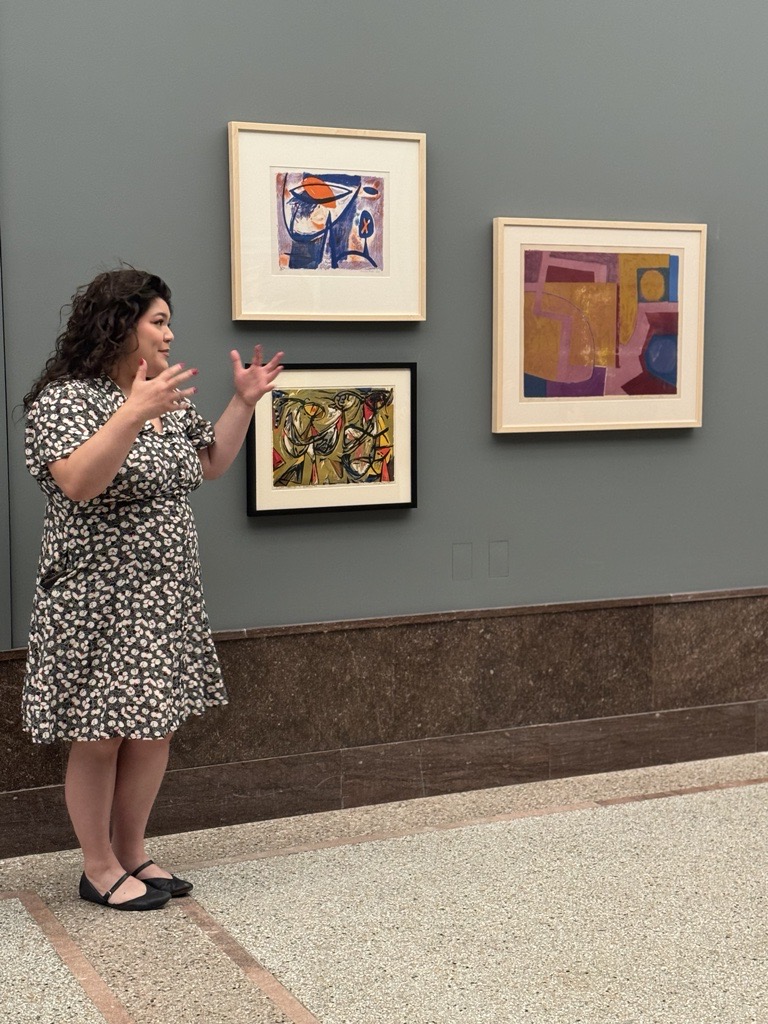
One particularly frigid winter in undergrad, I enrolled in a course entitled “The Classical World of Harry Potter,” with Professor Mitchell Parks. I had read the series many times and was excited to be among other “Potterheads” that didn’t write the saga off as merely children’s literature. Naively, I thought we would spend the term reanalyzing the magical world that we already knew and we would all receive top marks for it. I do not align with the incredibly harmful rhetoric J. K. Rowling has since become infamous for, but the course taught me a lot about how people engage with antiquity outside of academia. I read Aeschylus, Sophocles, and Virgil, just like Rowling would have while she was studying classics at Exeter.1 I also reread Harry Potter and the Deathly Hallows, just like I had in elementary school, and was delighted at how much richer the world became when I understood the classical references. As a recently declared history major, I thought a lot about literature’s role in history, and why it seemed like they were synonymous at some points and diametrically opposed at others. Coupled with my courses on historiography and history pedagogy, I began to understand history as less of a study of static dates and places, but rather a collection of research methods and strategies on how to understand the world through the ways that we have documented it.
My previous understanding of history as merely a study of the past was complicated by the question of what, exactly, comprises a study. Who conducts it? Is history-making only for professional historians? In Theatres of Memory: Past and Present in Contemporary Culture, Raphael Samuel argues that history is an activity rather than a profession, and one that requires the passion, skills, and expertise of many, many people. Theoretically, this could even include children’s literature darlings. He writes:
History is not the prerogative of the historian, nor even, as any postmodernism contends, a historian’s “invention.” It is, rather, a social form of knowledge; the work, in any given instance, of a thousand different hands. If this is true, the point of address in any discussion of historiography should not be the work of the individual scholar, nor yet rival schools of interpretation, but rather the ensemble of activities and practices in which ideas of history are embedded or a dialectic of past-present relations is rehearsed.2
Samuel goes on to describe the “motley character” of those essential to creating history scholarship.3 He celebrates the writers, ghost writers, indexers, copy editors, archivists, librarians, and even those whom he refers to as the “great army” of collectors who “have so often anticipated the directions which scholarship was later to take.”4 This understanding shifts priority from the output of history-making to the process. Rather than understanding the historian as an intrepid, isolated academic, we can begin to understand the historian as the facilitator for collaborative conversations larger than themselves.
The term “public history” entered into the historical lexicon to serve as a broad descriptor of all the ways history work was being done outside of traditional methods. Outside of the academy, museums, libraries, and archives have expanded access to historical knowledge and challenged the consensus around what counts as “real” history work. The reification of historical scholarship happening in galleries, state parks, and community centers is often understood to be much more accessible than that kept behind the paywalls of academic journals or conference circuits, and requires a greater willingness to engage in dialogue because of the breadth of engagement.
The term “public history” is more widely known today, but its definition remains surprisingly fluid. More than one historian has stated that public history is a bit like pornography in that one will know what it is when they see it.5 The National Council on Public History (NCPH) has seemingly embraced the ambiguity of the term, providing descriptions of what it could be rather than what it definitely is. Officially, NCPH states:
Public history describes the many and diverse ways in which history is put to work in the world. In this sense, it is history that is applied to real-world issues. In fact, applied history was a term used synonymously and interchangeably with public history for a number of years. Although public history has gained ascendance in recent years as the preferred nomenclature especially in the academic world, applied history probably remains the more intuitive and self-defining term.6
As a history student, I met self-identified public historians who presented exhibitions and worked directly with the community, many of whom maintained explicitly collaborative practices. This usually meant sharing curatorial decision-making authority with those that were involved (and their descendants) in the interpretation of historic events. Hilda Kean, previous Dean and Director of Public History at Ruskin College, Oxford, implores historians to embrace the opportunity to pedagogically engage with the blurred lines between the “public” and the “historian.” I do believe that centering the public as active consumers of history can significantly lower the access barrier and raise collective investment in histories that are representative of the world we live in—but the way I have seen public historians work is more reciprocal than just considering an audience outside of academia. Rather, the most successful public history work that I have witnessed acknowledges that knowledge is shared laterally throughout communities, and that everyone can both teach and learn simultaneously. This pedagogical approach has the potential to topple the barriers built between “history” and the “historian,” to embrace a more collaborative and inclusive history-making process. In 2010, Kean described this important work as “demystifying what historians do through sharing conceptual and not just content-based knowledge.”7
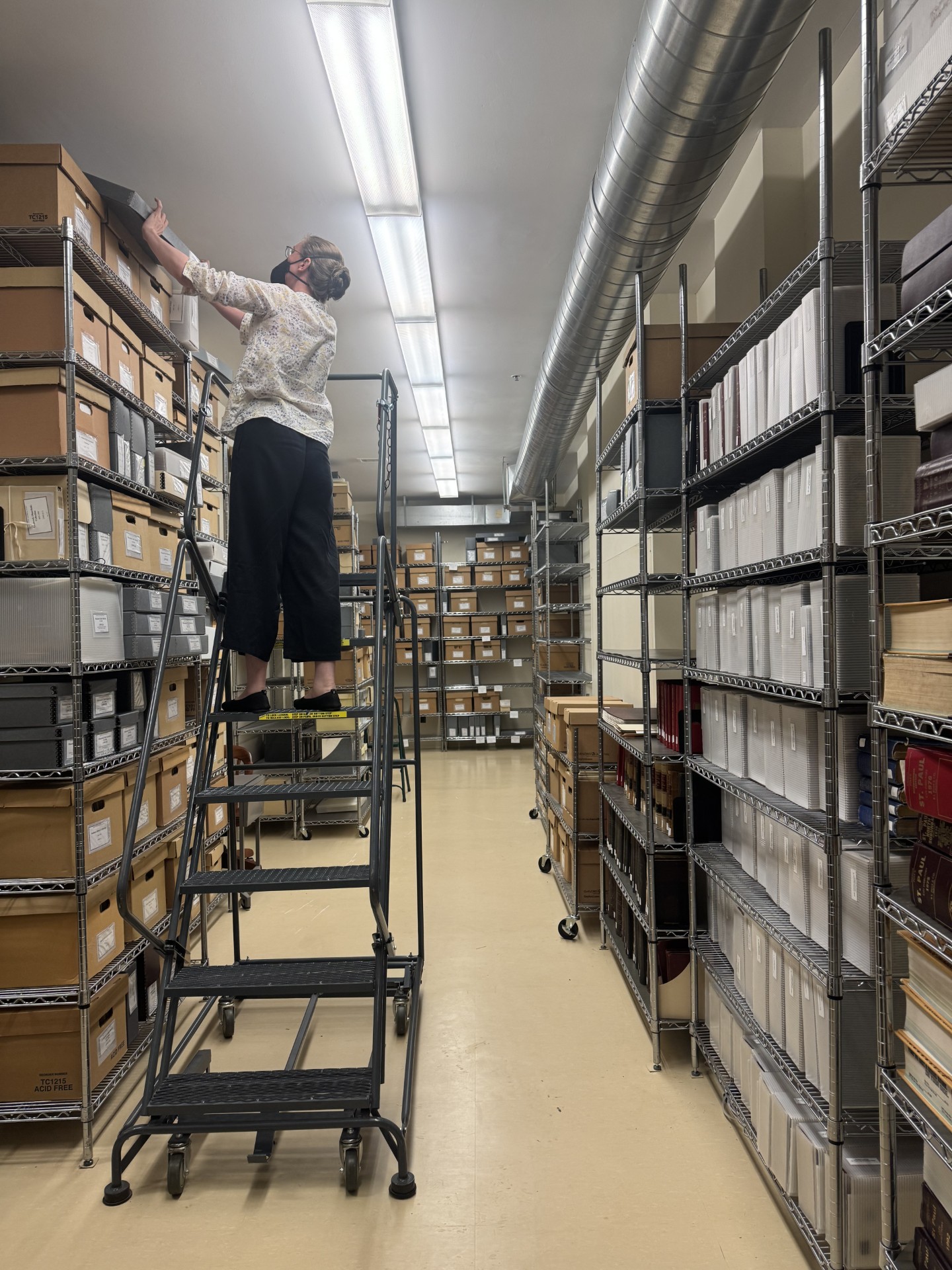
Making history can mean a myriad of different things. In Ramsey County, public history is happening all around us. The very magazine this essay appears in could be (and I might argue should be) considered a bold public history endeavor, as it solicits both autobiographical and researched articles from and about the residents of Ramsey County. Some organizations, including Ramsey County Historical Society (RCHS), engage with public history by hosting archives open to researchers from the community. As another example, the Hallie Q. Brown Community Archive (HQBCA) has the explicit goal to “collect and preserve items of enduring historical value relating to the historic Rondo Neighborhood in St. Paul, Minnesota.”8 The HQBCA cares for expansive records related to Rondo, including the personal papers of significant community figures, the administrative records for the community center dating back to 1929, and photographs of life in Rondo provided by the community. In addition to organizations, individuals in Ramsey County are engaging with concepts of community history and legacy as well. Seitu Ken Jones, a self-proclaimed “nephew of Rondo,”9 is formalizing plans for The Black Gate: a vision for an “artist-in-residence program, a studio, community library and archive in the heart of Frogtown.”10 Jones’s radical vision addresses the ongoing, systemic exclusion of Black artists from larger archival projects and seeks to create opportunities to rectify the current gap in the historical record.
Public institutions like RCHS, HQBCA, and The Black Gate are important for history-making as they allow for opportunities to engage and preserve, as well as actually make history outside of the academy. Decentering universities as the ultimate paragon of knowledge allows communities to take an active role in creating history from multiple perspectives. An independent nonprofit with a collection, archive, and research center allows anyone who is passionate or curious about history to produce high-level research without an institutional affiliation. Community archives, by definition, include community perspectives, values, and priorities in the materials they preserve. Central to the success of public history in Ramsey County is the spirit of reciprocity exemplified by Jones’s vision for The Black Gate. By supporting artists in the present through residencies that provide time and space to work, and then strengthening their tools to organize their creative archives, Jones hopes to address historical inequities as well as prevent future research gaps. While there are many reasons why one might choose to not engage with history as it is known in the academy, public history invites a multimodal, multivocal, and conceptually flexible framework to embrace the individual passions of each public historian and the community they come from. For all those who have entered the archive and found it lacking in the materials they care about, the democratization of the historical record is exhilarating.
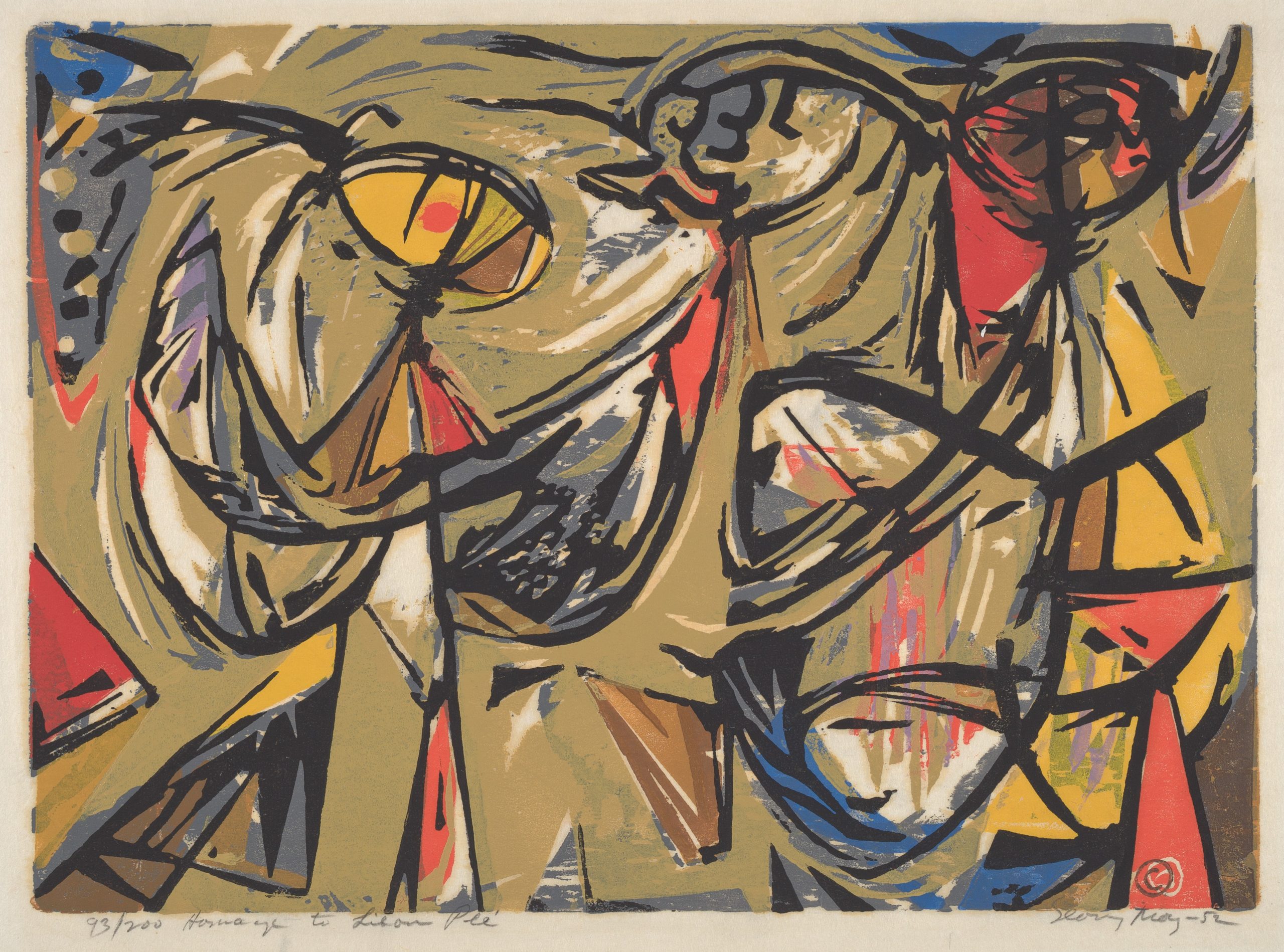
My central efforts as a public historian are to ensure that we have broad documentation of important people, ideas, and movements that shape our culture and inform our present. As I expand my practice beyond museum work, I am reflecting heavily on the absence of scholarship related to the artists that I find most interesting. In a similar vein as The Black Gate, I have noticed a distinct lack of documentation and analysis around the lives and work of artists of color working in Minnesota before the postmodern era—an example of which can be drawn from the lack of critical writing on printmaker Seong Moy. As I begin my next project on this exciting, under-celebrated artist, I hope to embrace Hilda Kean’s petition to demystify the work of the (public) historian by inviting you into my process.11
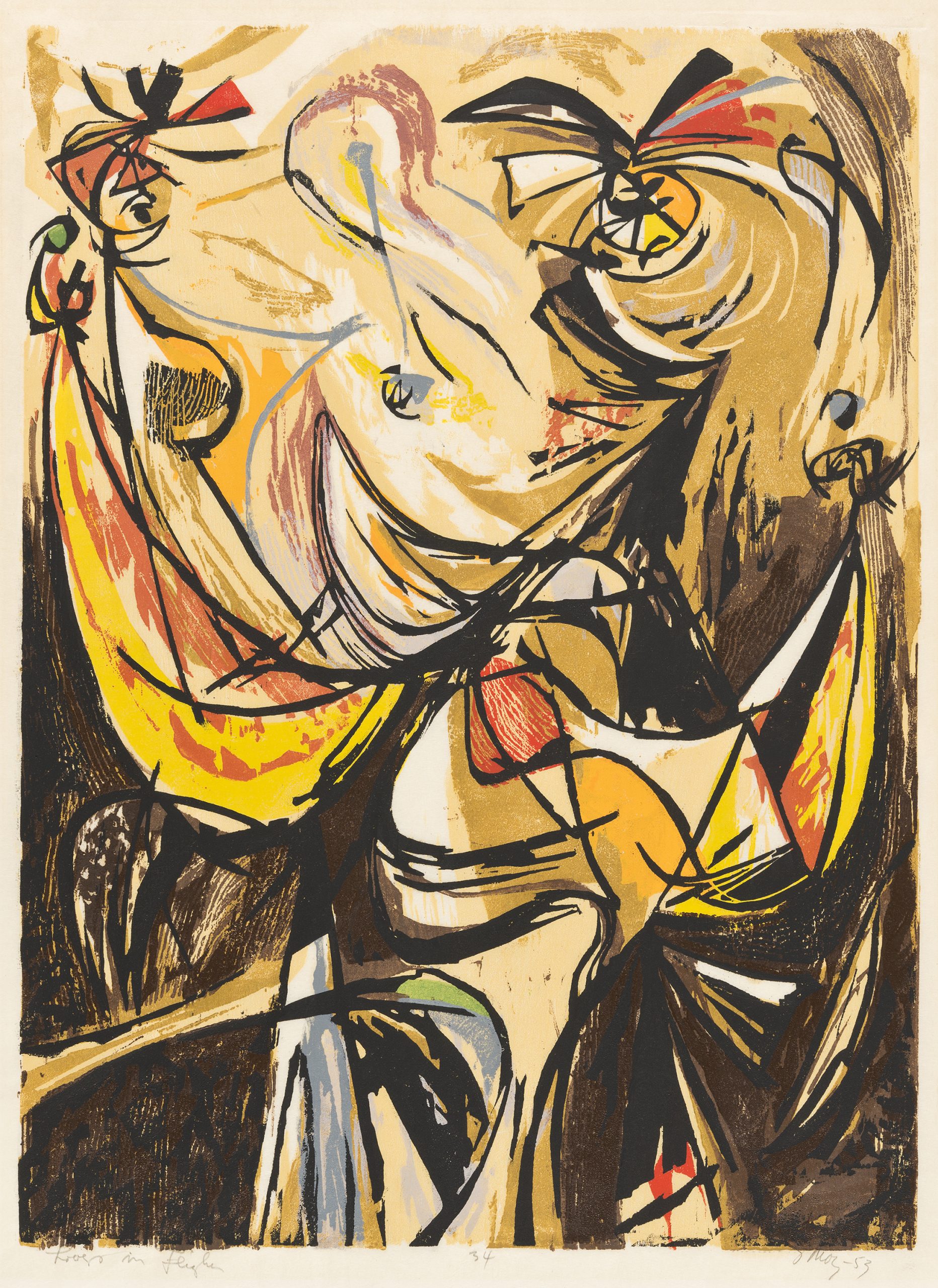
Recently, I included Seong Moy’s 1952 color woodcut Homage to Leoi Pei in an exhibition about making connections across people, time, and space.12 I was drawn to the gestural, dynamic quality of the angelic figures. While I was able to find primary sources, I was not able to find many secondary sources. From his oral history interview with the American Art Archives, I learned that in 1931, Moy immigrated from China to St. Paul, Minnesota at the age of ten. He studied painting at the St. Paul School of Art under Cameron Booth, and eventually moved to New York to continue his studies.13 He participated in multiple notable exhibitions during his lifetime and his work is in the collections of the Smithsonian American Art Museum, the Metropolitan Museum of Art, the Museum of Modern Art, and the Whitney Museum of American Art. Seemingly, the primary source material for this artist is rife. His artwork is striking and exemplifies a sophisticated understanding of color and form. In addition to Moy, I have been interested in many other printmakers from the interwar period, many of whom have not received the celebration I feel they deserve. On the whole, I find it to be an understudied time period and I have hypotheses about why.
As with any project, I begin with questions: What do I already know, and what am I hoping to learn from this process? In the case of Seong Moy, I know that I am excited about his artwork. I am curious about how his life experiences may have impacted his aesthetic taste and I am eager to examine his work in greater detail. I want to know more about the artists that he studied with. Who was enrolled at the St. Paul School of Art around the same time he was? Is there relevant documentation of his studies?
Once I know what I don’t yet know, I would typically begin an annotated bibliography. Because I have already unsuccessfully attempted to find secondary source material on this artist, I will principally focus on the primary sources. Does Moy have any family members with stories about his artwork and are they willing to speak to me? How might I reach them? I know that Moy lived from 1921–2013, so it isn’t totally out of the realm of possibility that he might have been active on social media. Could I learn anything from a Facebook search? What can I learn by reexamining the 1971 oral history interview? Would any of the museums that hold his work in their collections be willing to share their curatorial research files for this artist? I’ll take furious notes as I read, and eventually I’ll transpose them into something more legible. At this point in the process, though, my goal is to deepen my own understanding. I’m not yet worried about how I’ll share my findings. I allow myself to be messy and uncertain, as I know my own brain well enough to know that I need time to simmer before I’ll be ready to begin synthesizing what I’ve learned into something I can share.
When I feel like I have read everything I possibly can, I’ll start drafting an outline with topic sentences. I’ll begin to pencil in where I think sources will have the most impact, and I’ll try to find and address any conceptual gaps that may exist. I think it’s important to acknowledge that we all have internalized biases, so I’ll ask myself if there’s a perspective that I’m missing or if there’s a better source for an argument I’m making. History-making is an intensely personal endeavor, and I want to be transparent about how my lived experiences influence the work that I do. Why am I writing about this? Why am I doing it right now? Why am I doing it for this venue? Why is it important that I am doing it? My drafts are often long and unwieldy, but they are pruned and polished by my friends, colleagues, and patient editors.
If I am successful in creating a piece of scholarship that I am proud to share, I always try to share it with the artist or their descendants before presenting it publicly. Histories can be very personal, and while I’ve never had an artist ask to abridge the writing, I feel it is only a collaboration if they are afforded the right to withhold information that is better suited for private conversations. In this sense, I am often reminded of the questions posed in Robert Cozzolino’s article, “Is it Okay to See This?” Discussing archival research, he questions, “Are some details too painful to share? Would they speak as freely if they knew I was listening? What would it feel like to have everyone looking when you are at your lowest?”14 These questions often don’t have definitive answers, but I let Cozzolino’s queries be a guide for compassionate, empathetic scholarship. In the case of Seong Moy, I wonder if secondary scholarship is incomplete because of a desire for privacy. I wonder if his family would be excited to hear from me, or if they might decline my request to connect. Chinese immigration to the United States in the 1920s was not an uncomplicated endeavor, and I wonder how I might go about asking about it in a sensitive way.
Working within the margins as a public historian, I am able to address the historical record as it stands and take part in building the history that I want to see. I am grateful for the opportunity, but believe passionately, fervently, that we should all think of ourselves as public historians in some way or another. Because the relationship between history, the public, and public history is fluid, difficult to define, it is constantly in a state of evolution. We know that our histories are deeply important to understanding our own identities, and yet we have a confounding number of ways to define who the history-makers are and who they can be. Why can’t it be you?
Kylie Linh Hoang is an independent curator and public historian based in the Twin Cities. She earned her Bachelor of Arts in History and Museum Studies from Knox College and her Master of Heritage Studies and Public History from the University of Minnesota.
Notes
- Peter Wiseman, “ ‘At Figulus. . .’: J. K. Rowling and the Ancient World,” The Classical Outlook 79, no. 3 (2002): 93–96.
- Raphael Samuel, “Unofficial Knowledge,” Theatres of Memory: Past and Present in Contemporary Culture (Verso, 2012), 8.
- Samuel, Theatres of Memory, 23.
- Samuel, Theatres of Memory, 19.
- “So perhaps it is fruitless to seek consensus on a single definition. When all is said and done, public history may even be like jazz or pornography: easier to describe than define, and you know it when you hear it or see it.” Robert Weible, “Defining Public History: Is It Possible? Is It Necessary,” Perspectives on History, American Historical Association, March 1, 2008, www.historians.org/perspectives-article/defining-public-history-is-it-possible-is-it-necessary-march-2008/.
- “About the Field,” National Council of Public History, accessed July 6, 2026, https://ncph.org/what-is-public-history/about-the-field/.
- Hilda Kean, “People, Historians, and Public History: Demystifying the Process of History Making,” The Public Historian 32, no. 3 (2010): 26.
- “Interested in researching Rondo?” Rondo Center of Diverse Expressions, accessed July 6, 2026, https://rcodemn.org/researchdatabase.
- Seitu Ken Jones, discussion with the author, June 2026. Seitu humorously describes himself as a “nephew” of Rondo as opposed to a “son,” because he primarily visited the neighborhood on the weekends.
- “dear beloved community,” on Seitu Ken Jones’s official website, accessed July 6, 2026, https://seitujonesstudio.com/legacy/.
- Kean, “Demystifying the Process of History Making,” 26.
- Here, Now: Selections from the M’s Collection, Minnesota Museum of American Art, St. Paul, Minnesota, October 17, 2024–2030.
- Seong Moy, interview by Paul Cummings, Oral History Program, Archives of American Art, January 18-28, 1971, https://www.si.edu/object/archives/sova-aaa-moy71.
- Robert Cozzolino, “Is It Okay to See This?” Archives of American Art Journal 58 no. 2 (Fall 2019): 81.
- Year
- 2026
- Volume
- 61
- Issue
- 3
- Creators
- Kylie Linh Hoang
- Topics