
The Shoulders We Stand On – Persistence Exhibit
The Nineteenth Amendment to the United States Constitution passed in Congress on June 4, 1919. It was ratified, or approved, by three-fourths of the states on August 18, 1920. In thirty-nine words, women gained the right to vote throughout the country. At that time, and still today, some states make voting more difficult for some African American, Native American, and newly immigrated and men.
The fight for women’s rights in the United States is as old as the country. In 1776 during the Revolutionary War, Abigail Adams wrote her husband, John, the President. She urged him to “Remember the Ladies, and be more generous and favorable to them than your ancestors . . .”
By the 1820s and 1830s, women spoke in public to fight for both the end of slavery and for women’s rights. Women like Lucretia Mott learned valuable leadership and organizational skills in the women’s rights movement.
The Seneca Falls Convention, the first women’s rights convention in the United States, occurred July 19-20, 1848. A group of Quaker women in the area worked with Elizabeth Cady Stanton and organized the event to include Mott. Stanton wrote a Declaration of Sentiments and eleven resolutions relating to women’s rights, including suffrage. Only one resolution passed. Many, including Mott, wanted to leave suffrage out. Frederick Douglass, the only African American at the convention, strongly supported it, and is credited with its passage.
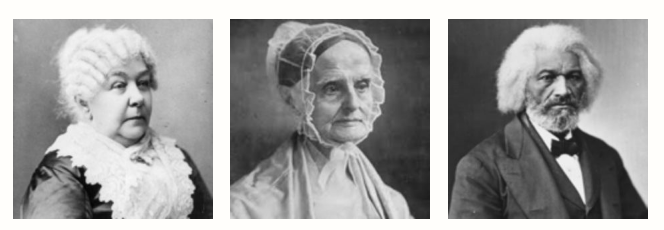
In 1869, Susan B. Anthony and Elizabeth Cady Stanton had founded the National Woman Suffrage Association (NWSA) to win suffrage at the federal level. Months later, Lucy Stone and others formed the American Woman Suffrage Association (AWSA). It focused on trying to change state constitutions. The two organizations merged in 1890 to become the National American Woman Suffrage Association (NAWSA).
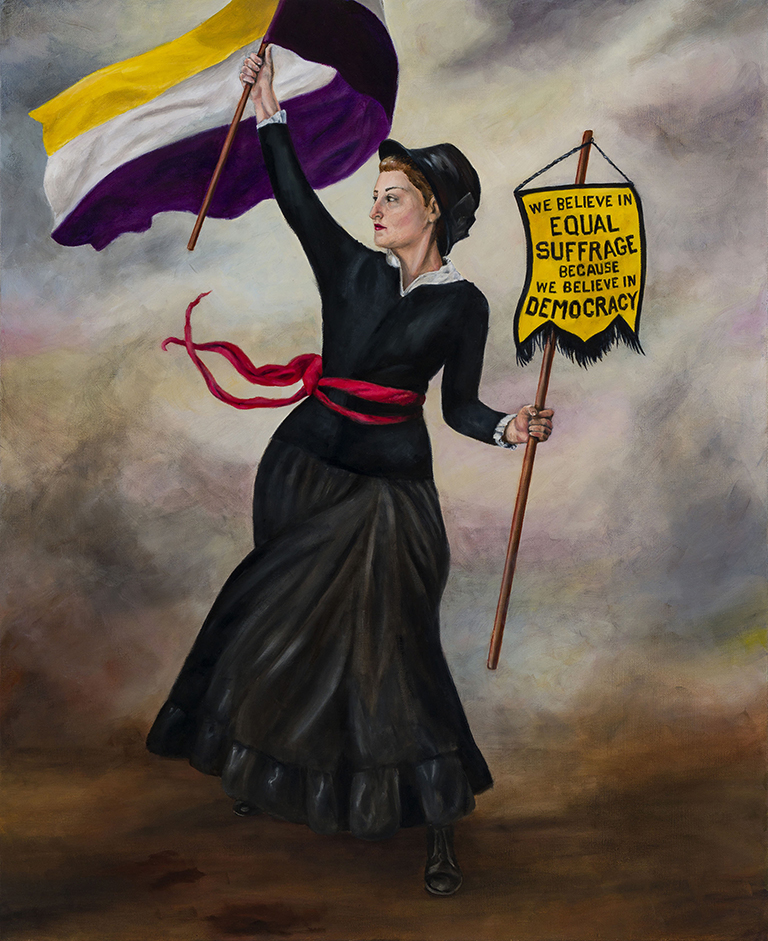
Artist: Klaire A. Lockheart
Oil on Canvas, 2020
Theresa Peyton
Theresa Peyton (1880-1929) was active in the Minnesota Woman Suffrage Association (MWSA). In 1912, she and others grew dissatisfied with how the organization was working throughout the state and formed the Equal Franchise League. This caused a rift between the women on the boards of the two organizations.
Peyton was elected president of the Equal Franchise League, which organized suffrage clubs throughout the state. She grew up in St. Paul in a working-class family and pursued higher education and a career. She was a teacher in the St. Paul schools in the early 1900s. She taught at Humboldt High School after she graduated from the St. Paul College of Law in 1909.
Through the years, she attended several national suffrage conventions and corresponded with prominent women and men in the suffrage movement, arranging for speakers to come to St. Paul.
Peyton volunteered her legal knowledge to help women and children through her work with the Protestant Women’s League.
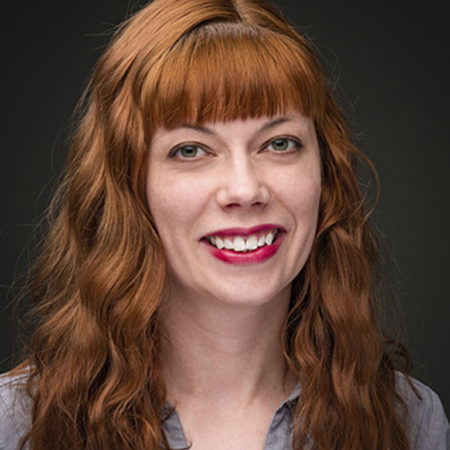
About the Artist – Klaire Lockheart
In many museums and government buildings, women are glaringly absent. The only time I ever see women is when they are included in the art or decorations as allegories for justice, liberty, or democracy. Traditionally, no actual women are represented. The women who shaped our history are missing. To correct this error, I deliberately chose to re-appropriate these historic poses of allegories and put influential women in their place.
This is portrait is a double act of defiance since not only are real women absent from dramatic history paintings, women artists were prohibited from creating them.
This oil on canvas painting represents Theresa Peyton as Liberty Leading the People; however, I represented Peyton with dignity in her contemporary clothing. Peyton was a teacher, lawyer, the Corresponding Secretary for St. Paul’s Political Equality Club, and she was part of the Minnesota Woman Suffrage Association. Because of her tenacity and support of women, I depicted her holding a banner from the St. Paul Equality Club and the Suffragist Flag. This is portrait is a double act of defiance since not only are real women absent from dramatic history paintings, women artists were prohibited from creating them.
Artist Bio
Klaire A. Lockheart is a feisty artist who uses traditional oil painting techniques to critique historical injustices in the traditional Western art world. She has lived in South Dakota since she earned her MFA from the University of South Dakota, and she is currently the Artist in Residence at the Vermillion Area Arts Council. Lockheart enjoys using the human form as a vehicle to communicate the agency of her subjects with viewers, especially since women artists were historically prohibited from studying live models and making historic paintings. In addition to addressing femininity and feminism within her artwork, Lockheart enjoys incorporating humor to make serious subjects approachable. She also enjoys celebrating the accomplishments of women, and she is the South Dakota artist for the national Her Flag collaborative artwork. Her recent solo exhibitions include Feminine Attempts at the Sioux City Art Center in Sioux City, IA; A is for Apron at the Ritz Gallery in Brookings, SD; and Ladylike Representations at Gallery 120 in Inver Grove Heights, MN.