
James and Frances Hughes and the Architecture of Black Excellence in Minnesota
- Year
- 2026
- Volume
- 61
- Issue
- 2
- Creators
- Jeremiah E. Ellis
- Topics
“The Merit of Service”
by Jeremiah E. Ellis
My mother once told me about a day in her childhood when a teacher offered to drive her home from school. As they pulled out of the parking lot, the teacher instinctively steered the car toward the neighborhood near Hazelwood Street and County Road B East—assuming incorrectly that, because my mother was Black, that was the only place she could possibly live. This wasn’t merely a navigational error; it was a manifestation of the “geography of assumption,” a mental map of invisible boundaries that dictated where Black excellence was permitted to take root in 1960s Ramsey County.
However, long before these suburbs were officially mapped by developers, generations of Black Minnesotans were busy dismantling the myth of inferiority with surgical precision. The African American enclave that the teacher so readily identified was not an accident of urban sprawl, but the direct byproduct of—as well as a response to—the overt discrimination faced by James and Frances Hughes in their youths. Their victory over segregated military structures and university housing bans created a neighborhood defined by the excellence and resistance they had practiced for decades. This story of defiance begins not in a suburban classroom, but in the mud and merit of the 809th Pioneer Infantry during World War I, where the architecture of a new Minnesota legacy was first drafted.
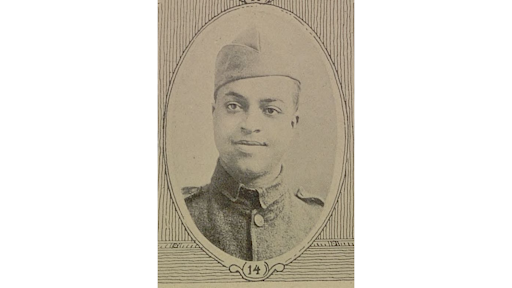
The 809th Pioneer Infantry and the Merit of Service
The entry of the United States into the Great War in 1917 forced a national reckoning with the “color line,” as the Wilson administration—which had recently resegregated the federal government—wrestled with how to mobilize nearly three million eligible Black men.1 While the military established a “Jim Crow Army” that relegated ninety percent of Black servicemen to labor battalions, the formation of the 809th Pioneer Infantry in 1918 offered a unique, albeit strenuous, middle ground. Pioneers were specialized units tasked with bridging the gap between manual labor and combat; they worked under artillery fire to repair roads, clear wire, and move ammunition to the front. Within this high-pressure environment, Minnesota’s African American soldiers forged what contemporary observers called a “Splendid Military Record.”2 Despite a system designed to highlight their perceived “natural suitability” for humble toil, the men of the North proved that their merit was not defined by the tasks they were assigned, but by the technical and psychological excellence they brought to them.
The struggle for recognition was inherent to the 809th’s structure. As a segregated unit, it was often comprised of men from across the Missouri, Indiana, and Oklahoma regions, yet Minnesota men consistently rose to the top of the hierarchy.3 Among these leaders was James T. Hughes, a slender, twenty-three-year-old receiving clerk at Lowertown’s Strong and Warner Company.4 Despite the military’s practice of marking draft cards with torn corners to identify “African descent,” Hughes’s performance could not be marginalized.5 Serving as Sergeant Major of the 1st Battalion, Hughes was part of a cohort of Minnesotans who dominated the regiment’s non-commissioned officer (NCO) positions.6 This advancement was no accident of geography; it was the direct result of psychological examinations held at Camp Dodge, where the Minnesota contingent outperformed their peers from across the country, securing the most critical leadership roles within the unit.7
The dominance of these local heroes was captured vividly in the primary source material of the era. In a letter dated November 30, 1918, sent from Savonay, France, Sergeant Norman Bradshaw wrote to Charles Sumner Smith, editor of the Twin City Star, to trumpet the achievements of the “boys from home.”8 Bradshaw noted with pride that Minnesota came out ahead in testing, resulting in the state’s men being given “nearly all of the non-commissioned positions of the regiment.” He provided a roster that read like a “Who’s Who” of Black Twin Cities leadership, featuring names like James K. Hilyard, Jasper Gibbs, and James Hughes. For Bradshaw, sharing this record—“humble though it may be”—was a way to assert the intellectual and organizational capability of Black Minnesotans to a domestic audience that often viewed them through the lens of Jim Crow stereotypes.
Ultimately, the era of the Great War served as a crucible for James Hughes’s identity. Though he returned to a “Red Summer” of racial violence and had to navigate complex bureaucracy to secure his $180 Minnesota State Soldier’s Bonus, his service record remained “Excellent.” The 809th Pioneer Infantry provided a platform where Hughes could thrive as a leader within a system specifically engineered to keep him in a secondary role. His transition from a St. Paul record clerk to a Battalion Sergeant Major in the American Expeditionary Forces established a legacy of leadership that informed his post-war life.9 Like many of his contemporaries, Hughes’s refusal to be limited by the “laborer” label helped lay the groundwork for the modern civil rights movement, proving that the merit of service was measured in character, not just in the rank on one’s sleeve.
Frances Bouyer and the U: Scholarship as Survival
The experience of African American students at the University of Minnesota during the interwar years was a paradox of intellectual proximity and social distance. While the U opened its academic doors, it firmly shuttered its residential ones. Under the administration of President Lotus Coffman, the university enforced a rigid policy of housing segregation, denying “Negro” students access to campus dormitories. This systemic exclusion created a landscape of social isolation, forcing students to endure grueling commutes from St. Paul or North Minneapolis. Charlotte Crump’s seminal essay, “This Free North,” captured this atmosphere, exposing the myth of Northern racial exceptionalism as students navigated a campus that welcomed their tuition but rejected their presence. For Black women, the isolation was particularly acute; the simple act of living on campus was deemed “ridiculous” by the prevailing white social order, leaving them to freeze on long trolley rides home after a day of classes.10
In the face of such institutional hostility, resistance took the form of sisterhood. The Alpha Kappa Alpha (AKA) Sorority, founded on the principles of culture and merit, arrived at the University of Minnesota in 1922.11 Initially organized as the Ivy Leaf Club under leaders like Bella Taylor and Katheryn Tandy, the group was formally installed as the Eta Chapter in December 1922 by National Basileus Lorraine Greene.12 These women did not merely seek social outlet; they built a safe haven to counter the demeaning stereotypes of the era. By 1923, Bella Taylor became the first Black woman to graduate from the university in four years, setting a precedent that academic excellence was the ultimate tool for social improvement and survival in an environment designed to marginalize them.13
This commitment to scholarship reached a historic zenith in 1926, a year now remembered for the “Hats Off to the Sorors” moment.14 In a stunning reversal of fortune, the Eta Chapter rose from twenty-first place—the very bottom of the campus scholarship rankings—to first place among all women’s Greek organizations.15 With a grade point average of 1.512, the AKAs surpassed every all-white sorority on campus, including their nearest competitor, Delta Delta Delta. Dean of Student Affairs E. E. Nicholson characterized the feat as one of the most remarkable achievements of the year. It was a powerful, data-driven rebuke to “white psychologists” of the day who posited theories of racial inferiority; as the St. Paul Echo triumphantly noted, the AKAs had “fairly run away with the scholastic laurels,” proving that their intellect was not just equal, but superior.16
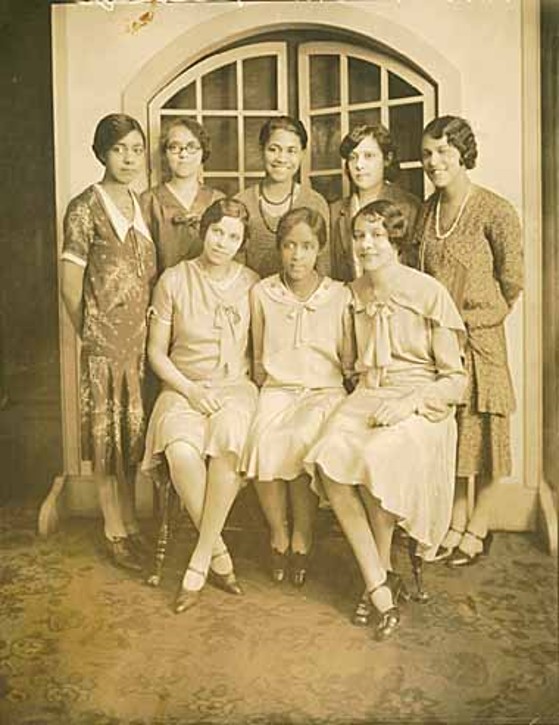
Centering this narrative of resilience was Frances Bouyer. A Chicago native who moved to the Twin Cities, Bouyer embodied the AKA spirit of leadership and tenacity.17 Throughout the late 1930s and early 1940s, she was a fixture of the U social and academic scene, serving as a general chairwoman for community initiatives like the “Big Baby Contest”18 and later as the general conference chairman for the Eighth Annual Central Regional Conference in 1941.19 Despite the social isolation of a campus where Black students were still excluded from the core of university life, Bouyer thrived. She balanced the demands of AKA leadership with rigorous study, culminating in her 1941 graduation with a degree in Library Science—a field dedicated to the preservation of knowledge she had fought so hard to access.20
The social fabric woven by Bouyer and her sorors was both elegant and strategic.21 Because they were barred from campus housing, these women relied on a sophisticated network of private residences and community hubs like the Hallie Q. Brown House to maintain their organized social structure.22 The home of Ms. Alice Franklin at 486 St. Anthony Avenue emerged as a vital node in this network. A prominent community figure and fraternal organizer who had lived in St. Paul since 1888, Ms. Franklin provided more than just a roof; her home served as a sanctuary and a domestic headquarters for scholars like her niece, Frances Bouyer.23 This graduate network transformed private parlor rooms into sites of academic rigor and sororal bonding, ensuring that the lack of a dormitory bed would never result in the loss of a degree. Within these homes, the pink and green of AKA teas—meticulously appointed affairs featuring candlelight, twining ivy, and classical music—were more than just parties; they were rehearsals for the leadership and sophisticated social structures the sorority would eventually bring to the national stage.24 Whether hosting cocktail parties for stars like Etta Moten25 or formal dances at the new Coffman Memorial Union,26 these women used the glory and honor of Alpha Kappa Alpha to transform scholarship into a means of survival and a blueprint for future community power.
“Making a Little Job a Big One”
The struggle for economic parity in St. Paul during the late 1930s was often defined by a persistence that transformed modest entries into significant professional milestones. In March 1939, the Education Committee of the St. Paul Urban League convened a pivotal panel discussion at the Hallie Q. Brown House titled “How unusual jobs can be gotten and held.”27 Designed to open the Vocational Opportunity Campaign, the session featured pioneers like architect Clarence Wigington and James Hughes, then a foreman at the Quality Park Envelope Company.28 The forum aimed to dismantle the myth of the closed door, providing a practical demonstration of how African Americans could secure and maintain employment in sectors traditionally shielded by institutional gatekeeping.29 By emphasizing ability over race and the necessity of specialized training, the Urban League sought to inspire a generation of youth to view local industry not as a dead end, but as a landscape where one could, in the words of the era, make a “little job a big one.”30
No individual better embodied this philosophy than James Hughes himself. Over a distinguished twenty-five-year tenure at the Consolidated Printing Ink Company, Hughes navigated the complexities of the industrial workspace to rise from a general laborer to the superintendent of the roller department.31 His ascent was not merely a personal victory but a civic benchmark; by 1941, his expertise led to an appointment on the advisory committee for national defense training in St. Paul, where he represented the interests of Black workers in the burgeoning war economy.32 His leadership extended into the social fabric of the city as president of the Sterling Club33 and a board member of the Urban League,34 proving that professional excellence was the bedrock upon which community influence was built.
The broader significance of Hughes’s trajectory was codified in the 1945 Governor’s Report, “The Negro Worker in Minnesota.”35 The report utilized James as a primary case study of success achieved in spite of the barriers that characterized the pre-war labor market. It highlighted his promotion to foreman at Brown & Bigelow—the world’s largest remembrance advertising firm—as a definitive example of how “skilled and semi-skilled Negro workers” could be integrated into technical roles when given the opportunity.36 This document served as both a testament to individual grit and a subtle indictment of the systemic hurdles that required such exceptional effort for standard professional advancement.
Parallel to these professional battles was a personal union that reflected the same spirit of endurance. In June 1942, James Hughes married Frances Bouyer at St. Mark’s A.M.E. Church in Milwaukee.37 The marriage was a meeting of two formidable intellects; Frances, a niece of the legendary Hallie Q. Brown38 and a former educator in the Chicago system, brought a wealth of experience in navigating institutional gatekeeping herself. Together, the couple became a cornerstone of St. Paul’s cultural and civic life, with Frances leading the Eta Chapter of Alpha Kappa Alpha39 and managing library initiatives at the Hallie Q. Brown House.40 Their partnership underscored a vital truth of the Rondo community: that the heights of professional achievement were often reached through quiet resilience and a home built on shared principles of excellence and service.
The Ten-Acre Gamble in Maplewood
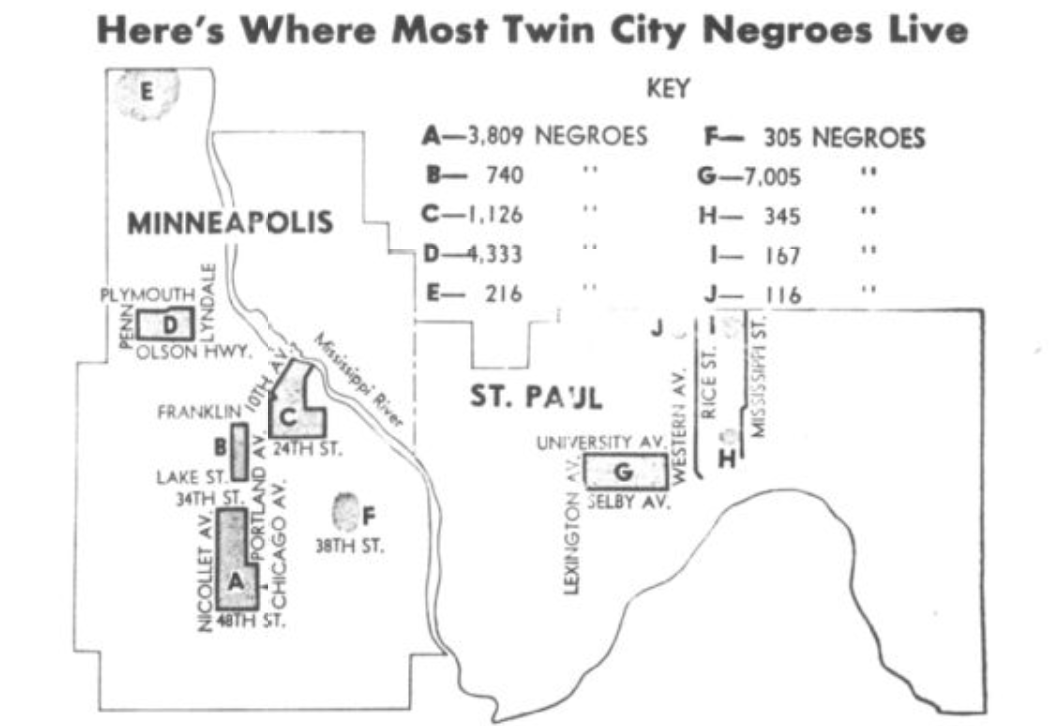
The story of the Maplewood enclave began not with a corporate developer, but with the quiet, strategic “night dealing” of James and Frances Hughes in 1946.41 She a civic-minded librarian recognized for dedicated leadership through Alpha Kappa Alpha beyond the university; he a skilled superintendent at the Consolidated Printing Ink Company and prominent St. Paul Urban League board member. They purchased ten acres of land in what was then known as a “restricted district” from a retired farmer.42 This transaction was born of necessity and grit: Originally intended as a joint investment among four Black families, the others withdrew at the closing, leaving James and Frances to face the financial and social risk alone.43 The farmer, reportedly feeling isolated and seeking to slight exclusionary neighbors, rejected a higher white offer to finalize the sale to the Hugheses.44 This bold acquisition stood in stark contrast to the “lily-white” suburban reality later detailed in a 1961 Minneapolis Star report, which described the difficulty for Black families to secure suburban housing as being “almost harder . . . than it is for a camel to pass through the eye of a needle.”45 At a time when federal mortgage insurance was often reserved for whites only, the Hugheses’ purchase represented a rare breach in the wall of Twin Cities segregation.
James and Frances displayed remarkable patience, waiting thirteen years for the land to be cleared and the debt settled before officially platting the tract into twenty lots in 1959. Understanding that their community would be scrutinized by a skeptical public, James insisted on a rigorous aesthetic and economic standard to ensure the neighborhood remained beyond reproach. He established a minimum home value of $17,500—a significant sum for the era—and although he did not strictly require double garages, nearly all residents built them to match the high standards of the development. The gamble paid off with historic speed: Within a year of platting, every lot was sold to Black families. By 1967, the community had blossomed into the most populous Black suburban area in the Twin Cities, with Maplewood’s Black population growing to 205 residents, up from seventy-five in 1960. The enclave stood as a testament to the Hugheses’ vision of a self-determined, prosperous suburban life, proving that Black excellence could thrive even in the most restricted landscapes of suburban Ramsey County.46
The Social Fabric of Sandhurst and County Road B
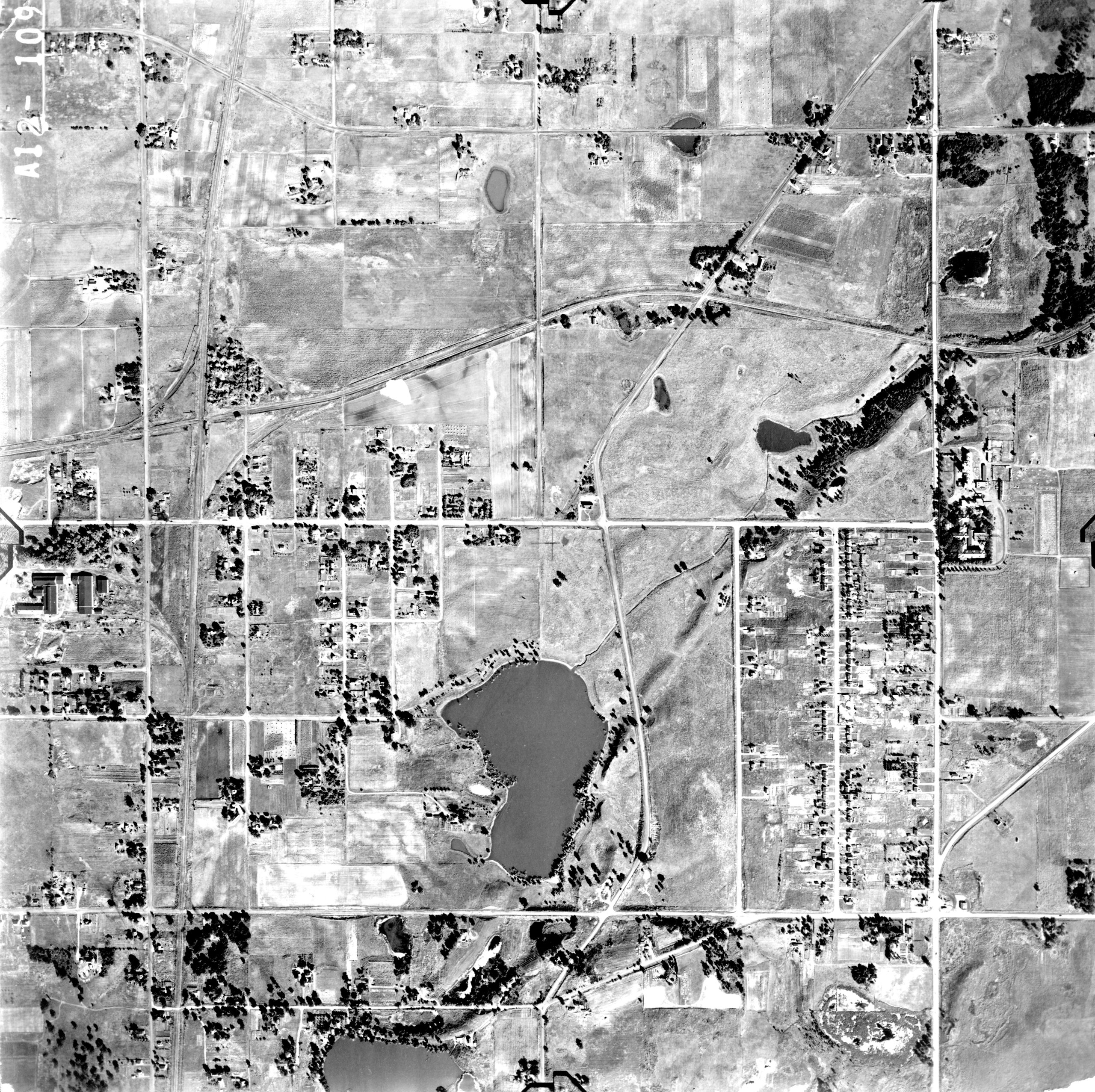
By the mid-1960s, the ten-acre tract envisioned by James and Frances Hughes had transformed from a strategic land acquisition into a vibrant theater of Black middle-income life.47 The architectural landscape of this enclave was defined by the custom-built ranch and split-level home, structures that signaled both modern taste and suburban permanency. These homes were often the result of long-held dreams and word-of-mouth networks; for Uzziel and Ann Marie Rogers, who moved to Sandhurst Avenue in the 1960s, the neighborhood was a “treasury” for her children, offering a rural-leaning charm where “there were patches of wild asparagus” and woods where “kids could grow up and be able to go . . . and play for hours.”48 In 1965, real estate listings in the St. Paul Recorder highlighted properties like the four-bedroom ranch-style house at 1557 County Road B East, featuring recreation rooms, multiple fireplaces, and attached garages.49 These homes, often marketed by prominent Black realtors like William M. Cassius and J. Nathaniel Smith,50 were offered with Federal Housing Administration and GI Bill financing, providing a gateway for Black veterans like Mr. Don Colbert to secure a foothold in the “exclusive Maplewood district.”51 Mr. Colbert, a twenty-year Air Force veteran, recalls that entrepreneur Ira Rawls “saved the last lot” for him while he was stationed in Texas because Colbert “wanted to bring [his] kids up in a nice school system.”52 The presence of builders like Edgar Steel and Ira Rawls—who constructed his own home at 1622 Sandhurst Avenue East in 1961—ensured that the neighborhood was not merely a residential development, but a project of community self-determination.53 Even in the face of racial intimidation, such as a 1962 cross-burning at the Rawls residence, the neighborhood remained resilient, buoyed by the support of white neighbors and a collective commitment to maintaining an immaculate suburban standard.54
Life in the enclave was characterized by a sophisticated “social courtesies” network that mirrored the elegance of the Rondo era while embracing the spaciousness of the suburbs. Mrs. Rogers noted that moving from the East Coast to a then-rural community was an adjustment, but the presence of neighbors like Marie Rawls—who shared news through the “community gathering place” of the beauty shop—created a tight-knit environment.55 This closeness provided a “built-in security system” during the social upheavals of the 1960s, as residents felt “surrounded by our own.”56 The homes of residents like John and Elizabeth Armstrong (1576 Sandhurst), Phillip and Alma Freeman (1581 Sandhurst), and Archie and Coopie Anderson (1593 County Road B East) became centers for a continuous cycle of bridal, birthday, and holiday celebrations.57 The St. Paul Sun and Recorder meticulously documented these gatherings, from the 1962 bridal dinner for Marcia Stewart Gordon decorated with silver candelabras, to a surprise birthday dinner, hosted that same year for Alma Stewart, where guests dined on shrimp creole, to the 1967 twin birthday celebration for eighty-two-year-old sisters Anna Banks and Emma Williams.58 These domestic spaces also served as temporary havens for visiting intellectuals and students.59
By the turn of the decade, this private hospitality had coalesced into the Maplewood Neighborhood Club, a formal social organization that turned the Sandhurst cul-de-sac into a site of public celebration. The Hugheses, Stanleys, Freemans, and Armstrongs were core members of this community built by choice, not by force.60 Beginning in 1967, the club’s annual July Fourth Block Party became a regional landmark, drawing upwards of two hundred people61 for an afternoon of “stereo taped music,” yard games, and communal dining.62 These festivities, led by officers like James Hughes Jr. and Alfred Stewart, were more than mere picnics; they were a visible assertion of Black joy and belonging in a historically “lily-white” county. They served as a living rebuttal to the racial intimidation seen elsewhere, proving that a diverse neighborhood could thrive through shared joy and mutual respect.
As the 1970s progressed, the neighborhood’s influence expanded into the broader civic and political sphere.63 Residents like Amos Haynes (1625 County Road B East) served on the selection committee for St. Paul City Council candidates and co-led ambitious NAACP membership drives, while others, like attorney James N. Bradford, served as Special Assistant Attorney General.64 Through a blend of “pinochle club” intimacy65 and high-stakes institutional leadership,66 the families of Sandhurst and County Road B successfully wove their private quest for excellence into the permanent civic life of Ramsey County—proving Mrs. Rogers’s reflection that “being more inclusive and diverse is good” and that “if you persevere . . . all’s been well.”67
Institutional Leadership and Civic Legacy
The transition of the Hughes family from the residential enclaves of St. Paul to the budding suburb of Maplewood was not merely a change in geography, but a migration of profound civic influence.68 By 1968, the family’s commitment to equity moved beyond the backyard of their Sandhurst Avenue home and into the formal halls of government. James and Frances Hughes were instrumental in the formation of the Maplewood Human Rights Commission, an entity established to advise the Village Council on anti-discrimination laws and to foster a “cultural mosaic” in a suburb that was, at the time, navigating the complexities of integration.69 Their leadership ensured that the commission didn’t just exist on paper but acted as a sentinel for progress, focusing on housing equity and educational reform.70
Frances Hughes’s trajectory into this role was a natural evolution of a lifetime spent in the service of community organizations.71 In the 1940s and 50s, she was a mainstay of the Alpha Kappa Alpha Sorority, often serving as secretary, where she meticulously documented the social and philanthropic pulse of the African American community.72 By the late 1960s, these organizational skills were channeled into formal governance; as the newly appointed Corresponding Secretary for the Human Rights Commission, Frances transitioned from a community chronicler to a civic leader advising the Village Council. Her work helped bridge the gap between grassroots advocacy and legislative action, ensuring that the voices of minority residents were represented in the village’s official growth strategies.
As for James T. Hughes, his lifetime of service was formally recognized in 1974. On the occasion of his eightieth birthday, the City of Maplewood passed a formal resolution honoring him. The City Council cited his “uncommon dedication” and “civic leadership,” noting that his efforts as a private citizen had significantly benefited the entire community.73 This resolution stood as a testament to a man who had once had to purchase land through “night dealing” to bypass restrictive covenants, yet ended his years as a celebrated architect of the city’s social and moral landscape.
A Map Redrawn
The Hazelwood enclave was never merely a cluster of homes or a geographic accident of sprawl; it was the physical manifestation of a lifetime spent navigating—and ultimately defeating—the architecture of segregation. For James and Frances Hughes, the ten-acre gamble in Maplewood served as the final blueprint in a long career of dismantling the myth of inferiority. From the mud of the 809th Pioneer Infantry to the scholarship laurels of the University of Minnesota and the superintendent’s office at a major industrial firm, the Hugheses practiced a philosophy of excellence that refused to be contained by the geography of assumption. By the time they established the Sandhurst cul-de-sac, they had transformed their private quest for dignity into a public standard of suburban belonging. Their legacy did not just provide a roof for Black families; it created a self-determined community that forced Ramsey County to rethink its invisible boundaries and acknowledge a new map of excellence.
Returning to the memory of the teacher’s “instinctive” turn toward Hazelwood, we see that her error was a tribute, albeit an accidental one, to the strength of the world the Hughes family built. She steered the car toward that neighborhood because, in her mind, “Black excellence” and “Hazelwood” had become synonymous—a testament to the fact that James and Frances had successfully anchored their identity to the land itself. They didn’t just find a home in the suburbs; they anchored a standard of civic leadership and sophisticated social grace that continues to resonate in the permanent tapestry of Ramsey County. Their story serves as a reminder that maps are not just drawn by developers and surveyors, but by the courage of those who refuse to stay within the lines.
Jeremiah E. Ellis is a public history researcher and St. Paul Heritage Preservation Commissioner dedicated to uncovering and uplifting African American narratives within the local landscape. He holds a Master of Public Administration and serves on the board of the Ramsey County Historical Society, fostering inclusive learning spaces that connect past to present. His commitment to archival research and local history preservation is profoundly inspired by his cherished roles as a husband and father.
Notes
- Kinshasha Holman Conwill, ed., We Return Fighting: World War I and the Shaping of Modern Black Identity (Smithsonian Books, 2019); Arthur E. Barbeau and Florette Henri, The Unknown Soldiers: African-American Troops in World War I (Temple University Press, 1974).
- “Minnesota Negroes Make Splendid Military Record,” The Twin City Star, December 28, 1918.
- “Splendid Military Record,” The Twin City Star.
- James T. Hughes WWI Draft Registration Card, June 5, 1917, https://www.ancestry.com/search/collections/6482/records/28832824; James T. Hughes, Honorable Discharge Certificate, July 29, 1919, box 125.H.16.3B, Gale Family Library, Minnesota Historical Society, St. Paul, MN.
- Jennifer Keene, “African American Soldiers in World War I,” lecture, 15th Annual Truman Library Teachers’ Conference, August 10, 2018, Harry S. Truman Library and Museum, Independence, MO, https://www.youtube.com/watch?v=izZJ-4dhx2k.
- “Splendid Military Record,” The Twin City Star.
- Popularized by army psychologists during World War I, these mass intelligence tests—primarily the Alpha (for literates) and Beta (for illiterates)—were often used to “scientifically” validate racial hierarchies. While psychologists like George O. Ferguson and Carl Brigham attributed the lower median scores of African Americans to innate deficiencies, the data frequently revealed that performance correlated more closely with educational access and geography than race. For instance, Black draftees from the North often outscored Southern white draftees, and the Beta test—which initially showed no significant racial differences—was revised by the military until it produced the desired discrepancy in scores. Within the 809th Pioneer Infantry, however, Minnesota’s Black soldiers leveraged these examinations to secure a disproportionate number of leadership and non-commissioned officer (NCO) roles, effectively turning a tool of exclusion into a metric of merit. See Chad Williams, Torchbearers of Democracy: African American Soldiers in the World War I Era (University of North Carolina Press, 2010), 96-97; and Arthur E. Barbeau and Florette Henri, The Unknown Soldiers: African-American Troops in World War I (Temple University Press, 1974), 44-48.
- “Splendid Military Record,” The Twin City Star.
- James T. Hughes, WWI Bonus Record, October 15, 1919, box 125.H.16.3B, Gale Family Library, Minnesota Historical Society, St. Paul, MN.
- Charlotte Crump, “This Free North,” University Literary Review, April 5, 1937, University of Minnesota Archives, Dean of Women, Box 1, Folder 16, Negro.
- Bella T. Taylor, “Alpha Kappa Alpha Sorority at ‘U,’ ” The Appeal, June 16, 1923; Linda Garrett, The Hidden Figures of Delta Phi Omega Chapter, Alpha Kappa Alpha Sorority, Inc.: Reflection Of A Golden Soror 1948-2022 (self-published, 2024).
- “University Girls Organize: Sorority Plans Activities,” The Northwestern Bulletin, October 7, 1922; “Alpha Kappa Alpha Sorority,” The Appeal.
- “Completes Course In Social Service Work At State University,” The Appeal, June 16, 1923.
- “Hats Off to the Sorors,” St. Paul Echo, October 2, 1926.
- “Colored Girls Stand First in University List,” St. Paul Echo, October 2, 1926.
- “Hats Off,” St. Paul Echo.
- “Mrs. Frances Bouyer of Chicago and Mr. James Hughes . . . Married,” St. Paul Recorder, July 3, 1942.
- “Sorority Women Sponsor Big Baby Contest,” St. Paul Recorder, November 1, 1940.
- “Sorority Women Hold Eighth Annual Regional Conference In Twin Cities,” St. Paul Recorder, June 6, 1941.
- “University of Minnesota Graduates,” St. Paul Recorder, June 13, 1941.
- “A.K.A. To Hold Fellowship Tea Sunday,” St. Paul Recorder, October 13, 1939.
- “Sorority Sponsors Dance,” Twin-City Herald, February 11, 1933.
- “University of Minnesota Graduates,” St. Paul Recorder, June 13, 1941; “96-Year Old St. Paul Woman Is Dead,” The Saint Paul Sun, June 13, 1957.
- “Eta Chapter, Alpha Kappa Alpha Sorority Entertained at a Beautifully Appointed Tea,” St. Paul Recorder, October 18, 1940.
- “Etta Moten Is Feted By Alpha Kappa Alpha Chapter,” Twin-City Herald, January 19, 1935.
- “Eta Party at Union,” St. Paul Recorder, December 20, 1940.
- “Job Guidance Meeting Sunday At Hallie House,” St. Paul Recorder, March 17, 1939.
- “GETTING A JOB!!! WINNING A PROMOTION!!!” advertisement, St. Paul Recorder, March 17, 1939.
- “Job Guidance Meeting,” St. Paul Recorder.
- “St. James A. M. E. Church: Young People’s Meeting,” St. Paul Recorder, April 10, 1942.
- Governor’s Interracial Commission, “The Negro Worker in Minnesota: A Report to Governor Edward J. Thye” (March 10, 1945).
- “James Hughes On Saint Paul Defense Board,” St. Paul Recorder, February 7, 1941.
- “Sterling Club Conducts Hallie Q. Forum Sunday,” St. Paul Recorder, December 3, 1943.
- “New St. Paul Urban League Secretary Welcomed, “St. Paul Recorder, December 5, 1941.
- Governor’s Interracial Commission, “The Negro Worker in Minnesota.”
- “Are Skilled Workers More St. Paulites,” St. Paul Recorder, May 16, 1946; “Harvester Defense Plant Upgrades Negro Employees,” St. Paul Recorder, March 6, 1942.
- “Marriage of Miss Frances Bouyer and Mr. James Hughes,” St. Paul Recorder, July 3, 1942.
- Hallie Quinn Brown (1849–1949) was a pioneering African American educator, elocutionist, and author who played a central role in the Black clubwomen’s movement and the fight for women’s suffrage. A founding member of the National Association of Colored Women, Brown campaigned extensively for equal educational access and political representation. Her 1926 work, Homespun Heroines and Other Women of Distinction, was the first biographical encyclopedia of Black women compiled by a Black woman. In 1929, the Hallie Q. Brown Community Center in St. Paul was named in her honor after a student essay contest identified her as an “outstanding leader” and model of “Black racial uplift.” See Daleah B. Goodwin, “ ‘A Torch in the Valley’: The Life and Work of Miss Hallie Quinn Brown” (PhD diss., University of Georgia, 2014).
- “Hallie Q. Brown Branch Library Open to Public,” St. Paul Recorder, April 9, 1943.
- “Sorority Elects Officers,” Minneapolis Spokesman, June 16, 1944.
- Sherrie Mazingo, “Negroes in the Suburbs: Two Centers Develop in Last 7 Years,” Minneapolis Star, May 31, 1967.
- Ibid.
- Ibid.
- Ibid.
- Paul Gilje, “Twin Cities Suburbs Revealed As Almost Lily-White; Minneapolis Star Writer Finds,” St. Paul Recorder, December 22, 1961.
- Mazingo, “Negroes in the Suburbs.”
- Mazingo, “Negroes in the Suburbs.”
- Ann Marie Rogers and Don Colbert, interview with Jeremiah Ellis, “Community Conversation: Reflecting on Race and Housing in Maplewood,” Maplewood Neighborhood History Project, February 6, 2025.
- Wm M Cassius, “Real Estate For Sale,” advertisement, St. Paul Recorder, October 28, 1965.
- J. Nathaniel Smith, “Real Estate For Sale,” advertisement, St. Paul Recorder, July 29, 1965.
- “Armstrongs to Build Home,” St. Paul Recorder, February 10, 1961.
- Ann Marie Rogers and Don Colbert, interview by Jeremiah Ellis.
- “Mr. and Mrs. Ira Rawls,” Saint Paul Sun, October 5, 1961.
- “Police Chief Calls Cross Burning Before Home a Teenager’s Prank,” St. Paul Recorder, May 4, 1962.
- Ann Marie Rogers and Don Colbert, interview by Jeremiah Ellis.
- Ibid.
- “Open House by Armstrongs,” St. Paul Recorder, December 8, 1961; “Personalities in the News: Saw Iris Gambol,” Saint Paul Sun, February 22, 1962; “Mr. and Mrs. Archie Anderson,” Saint Paul Sun, March 17, 1960.
- Estyr Bradley Peake, “A delicious shrimp creole dinner,” Saint Paul Sun, July 5, 1962; Estyr Bradley Peake, “Wearing a short apricot chiffon,” Saint Paul Sun, August 2, 1962; “Twin Sisters Celebrate 82nd Birthday,” St. Paul Recorder, December 28, 1967.
- “African College Students Attend Women’s Institute At Macalester College,” St. Paul Recorder, July 2, 1964.
- “Neighborhood Club Gives Block Party on 4th of July,” St. Paul Recorder, July 11, 1968.
- “Annual Block Picnic Held in Maple Wood for Fifth Year,” St. Paul Recorder, July 8, 1971.
- “Neighborhood Club Gives Block Party,” St. Paul Recorder.
- “Commission Organization,” 1971 Annual Report (City of Maplewood, 1972); “Area Rights Advocates Rally In Emergency,” St. Paul Recorder, May 18, 1967.
- “Executive Director St. Paul Urban League (Submit Resume to: Amos A. Haynes),” St. Paul Recorder, January 24, 1974; “St. Paul NAACP 1979 Membership Program,” St. Paul Recorder, May 10, 1979; “Atty.-Gen. Mondale Reappoints James N. Bradford,” St. Paul Recorder, May 27, 1960.
- “Breakfast Pinochle Club,” St. Paul Recorder, May 29, 1969.
- “Manager Equal Opportunity Programs,” St. Paul Recorder, June 25, 1970.
- Ann Marie Rogers and Don Colbert, interview by Jeremiah Ellis.
- Mazingo, “Negroes in the Suburbs.”
- “Six Appointed to Maplewood Human Rights Group,” St. Paul Recorder, July 11, 1968.
- “Future Goals of Commission,” 1971 Annual Report (City of Maplewood, 1972).
- “St. Paul Urban League To Present Certificates Of Recognition To Citizens,” St. Paul Recorder, April 14, 1950.
- “Delta Phi Omega Chapter of Alpha Kappa Alpha Society,” Twin City Observer, September 28, 1950; “Delta Phi Omega Chapter . . . met Friday, May 18,” Twin City Observer, May 24, 1951.
- Maplewood City Council Meeting Minutes, “Resolution 74-9-216,” September 19, 1974, City Archives, Maplewood, MN.
- Year
- 2026
- Volume
- 61
- Issue
- 2
- Creators
- Jeremiah E. Ellis
- Topics